You wake up with a heavy heart. The weight of past mistakes, missed prayers, or harsh words spoken in anger feels like a physical burden. In a modern world filled with endless distractions, college students, working professionals, and diaspora parents often struggle with a quiet but persistent anxiety: What if my time runs out before I truly repent?
This fear of leaving the world with an unpurified soul is exhausting. But Islam offers an immediate, powerful remedy. The profound supplication “allahumma ighfir lana qablal maut” is a comprehensive spiritual habit that secures your afterlife. It is the ultimate plea for Allah’s mercy across every stage of your spiritual journey—from this life to the Day of Judgment.
What Does Allahumma Ighfir Lana Qablal Maut Mean?
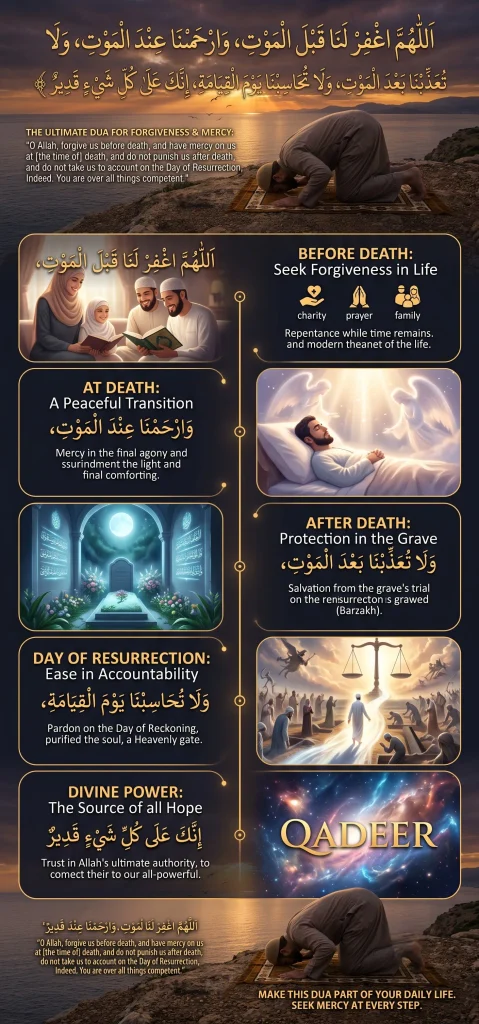
The dua allahumma ighfir lana qablal maut translates to “O Allah, forgive us before death.” It is the opening phrase of a larger, four-part supplication that asks Allah for forgiveness in life, gentle mercy during the agonies of death, protection from the punishment of the grave, and absolute pardon on the Day of Resurrection.
Here is the complete multilingual breakdown of this powerful prayer so you can implement it perfectly:
Arabic Text:
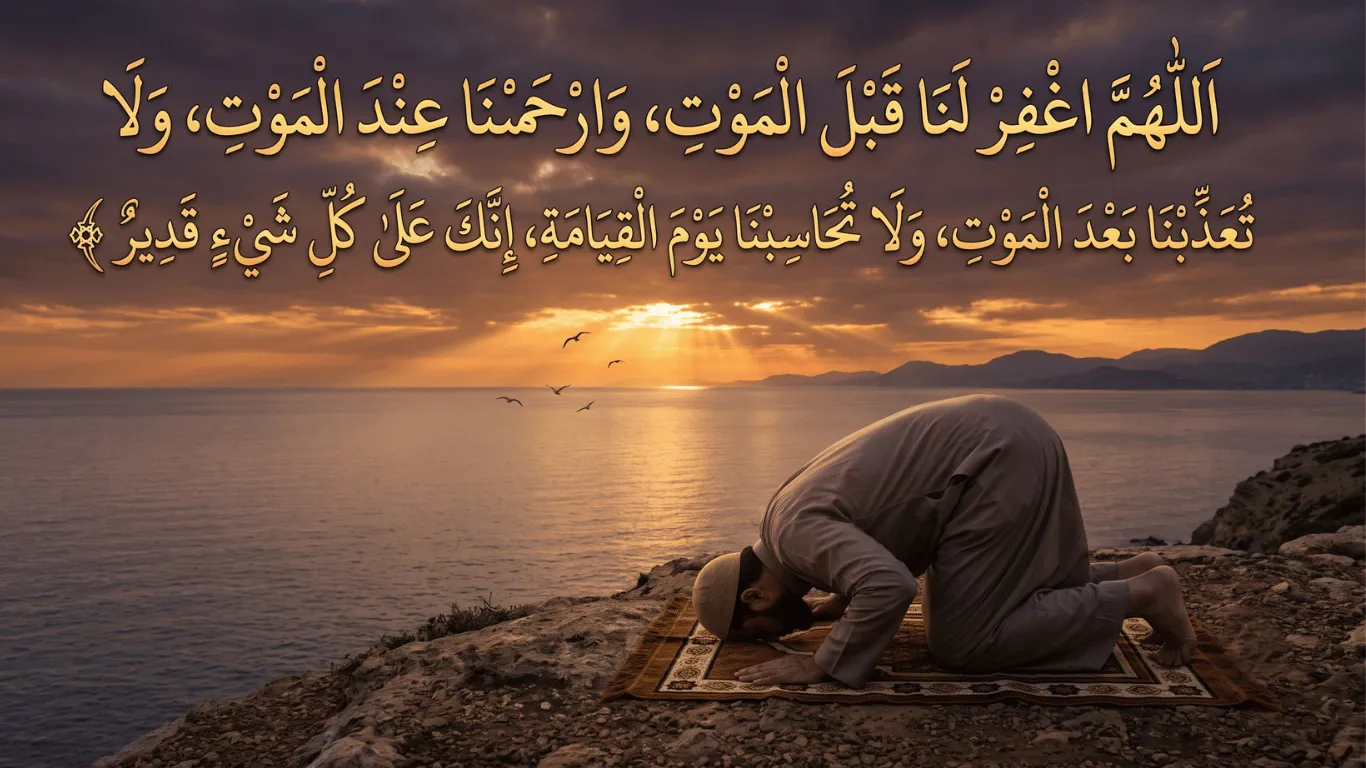
اللَّهُمَّ اغْفِرْ لَنَا قَبْلَ الْمَوْتِ، وَارْحَمْنَا عِنْدَ الْمَوْتِ، وَلَا تُعَذِّبْنَا بَعْدَ الْمَوْتِ، وَلَا تُحَاسِبْنَا يَوْمَ الْقِيَامَةِ، إِنَّكَ عَلَىٰ كُلِّ شَيْءٍ قَدِيرٌ
Transliteration:
Allahumma ighfir lana qablal maut, wa-arhamna ‘indal maut, wa la tu’athibna ba’dal maut, wa la tuhasibna yawmal qiyamah, innaka ‘ala kulli shayin qadeer.
English Translation:
O Allah, forgive us before death, and have mercy upon us during death, and do not punish us after death, and do not hold us accountable on the Day of Resurrection, indeed You have power over all things.
Urdu Translation:
اے اللہ، موت سے پہلے ہماری مغفرت فرما، موت کے وقت ہم پر رحم فرما، موت کے بعد ہمیں عذاب نہ دے، اور قیامت کے دن ہم سے حساب نہ لے، بیشک تو ہر چیز پر قادر ہے۔
Hindi Translation:
हे अल्लाह, मौत से पहले हमें क्षमा कर, मौत के समय हम पर दया कर, मौत के बाद हमें दंड न दे, और कयामत के दिन हमारा हिसाब न ले, बेशक तू हर चीज़ पर कादिर है।
Why This Dua is Your Strongest Shield for the Afterlife
This supplication works because it acts as an eschatological map—a complete timeline of the soul’s journey. It systematically asks Allah to intervene at the four most critical and terrifying stages of existence: life, the exact moment of death, the grave (Barzakh), and the Day of Judgment.
Let’s break down the exact meaning and theological weight of this supplication.
1. Forgiveness Before Death (Qablal Maut)
In Islamic theology, the door of Tawbah (repentance) remains open until the soul reaches the throat (the death rattle). Asking for forgiveness before this moment ensures you achieve Husn al-Khatimah (a good, peaceful ending).
2. Mercy During Death (‘Indal Maut)
Death is a profound transition. The Quran and Hadith mention the stupor of death (Sakarat al-Mawt). Here, you are asking for Allah’s soothing mercy so the Angel of Death extracts your soul gently, allowing you to recite the Shahadah easily.
3. Protection After Death (Ba’dal Maut)
This refers to the intermediate realm of the grave. You are asking Allah for protection from the punishment of the grave, ensuring your resting place becomes a garden of Paradise rather than a place of distress.
4. Pardon on the Day of Judgment (Yawmal Qiyamah)
The Prophet Muhammad (PBUH) taught that anyone subjected to a strict accounting of their deeds will fail. You are asking to skip the interrogation entirely and enter Paradise through Allah’s sheer grace.
Seeking this grace requires profound patience. As believers, we must constantly fight our spiritual weaknesses. We find strength in the Quranic promise that innallaha ma sabireen (indeed, Allah is with the patient). When the guilt of sin feels overwhelming, remembering innallaha ma sabireen helps you stay steadfast on the path of repentance.
Quranic and Hadith Evidence on Infinite Forgiveness
Allah’s capacity to forgive is limitless. Surah Az-Zumar (39:53) explicitly commands believers never to despair of His mercy, regardless of the severity or frequency of their sins. Sincere repentance completely wipes the slate clean.
When integrating allahumma ighfir lana qablal maut into your routine, ground your heart in this absolute truth from the Quran:
Arabic Text:
قُلْ يَا عِبَادِيَ الَّذِينَ أَسْرَفُوا عَلَىٰ أَنفُسِهِمْ لَا تَقْنَطُوا مِن رَّحْمَةِ اللَّهِ ۚ إِنَّ اللَّهَ يَغْفِرُ الذُّنُوبَ جَمِيعًا ۚ إِنَّهُ هُوَ الْغَفُورُ الرَّحِيمُ
Transliteration:
Qul ya ‘ibadiyallatheena asrafoo ‘ala anfusihim la taqnatoo min rahmatillah, innallaha yaghfiruth thunooba jamee’a, innahu huwal ghafoorur raheem.
English Translation:
Say, “O My servants who have transgressed against themselves [by sinning], do not despair of the mercy of Allah. Indeed, Allah forgives all sins. Indeed, it is He who is the Forgiving, the Merciful.”
Urdu Translation:
کہہ دو، اے میرے بندو جنہوں نے اپنی جانوں پر زیادتی کی ہے، اللہ کی رحمت سے مایوس نہ ہو۔ بیشک اللہ سب گناہ بخش دیتا ہے۔ بیشک وہ بڑا بخشنے والا، نہایت رحم کرنے والا ہے۔
Hindi Translation:
कह दो, “हे मेरे बंदो जिन्होंने अपने आप पर ज़्यादती की है, अल्लाह की रहमत से निराश न हो। बेशक अल्लाह सब गुनाह बख़्श देता है। बेशक वही बड़ा बख़्शने वाला, निहायत रहम करने वाला है।”
This verse guarantees that no sin is greater than Allah’s mercy. The Prophet Muhammad (PBUH) confirmed this in Sahih Muslim (Hadith 2759), stating: “Allah, the Exalted and Glorious, stretches out His Hand during the night so that the people may repent for the fault committed from dawn till dusk…”
When you feel crushed by your mistakes, remember that fa inna ma’al usri yusra (with hardship comes ease). The hardship of a guilty conscience is immediately relieved by the ease of Allah’s forgiveness.
Actionable Routine: How to Make This Dua a Daily Habit
Transform this dua from a random thought into a structured daily habit by attaching it to existing actions. Recite it during Sujood (prostration), immediately after your obligatory prayers, or during the quiet hours of Tahajjud when prayers are highly accepted.
Here is why this matters for your daily routine. Building a “Spiritual Habit Loop” ensures you never miss a day of seeking forgiveness.
| Timing / Trigger | Why It Works | Spiritual Benefit |
| During Sujood (Prostration) | The Prophet (PBUH) said a servant is closest to Allah in Sujood. | Maximum humility; prayers are highly likely to be answered. |
| After Fard (Obligatory) Salah | Capitalizing on the moments right after completing a divine command. | Cleanses any deficiencies or lack of focus during the prayer itself. |
| The Last Third of the Night | Allah descends to the lowest heaven asking who seeks His forgiveness. | Deeply personal connection; pure sincerity away from the eyes of others. |
| During Hardship or Anxiety | Reciting it when feeling overwhelmed channels fear into reliance on God. | Manifests the reality of innallaha ma sabireen by trusting His timing. |
FAQS:
While the exact sequence of this phrasing is not found as a strict, verbatim Hadith of the Prophet (PBUH), every single component of the dua is derived from authentic Sunnah and Quranic principles. Scholars agree it is highly beneficial and completely permissible to recite.
There is no fixed Sunnah count for this specific phrasing. You can recite it once with deep conviction, or repeat it multiple times during times of high spiritual energy, such as Fridays or during Ramadan.
Yes. Islam teaches that human beings are inherently flawed. If you fall back into a sin, your original repentance remains valid. You must simply renew your intention, repent again, and trust that Allah will continue to forgive as long as your heart is sincere.
This specific wording is phrased for the living (asking for forgiveness before death). For the deceased, you should use established prayers like Allahummaghfir lahum warhamhum (O Allah, forgive them and have mercy on them).
Your Next Step Toward Spiritual Peace
Forgiveness from Allah is not a distant, unreachable goal. It is an active, daily conversation with your Creator. By integrating this powerful dua into your routine, you secure peace in this life and the next.
If you are looking to bring even more blessings, protection, and prophetic habits into your daily life and interactions with others, you should read our complete guide on the power of saying assalamualaikum and how it transforms your daily encounters.
