The question that changes everything: What if the most powerful thing you could do today takes less than 10 seconds?
For Gen-Z Muslims scrolling through endless content in 2026, the answer might be right beneath your fingertips. Durood Shareef isn’t just another Islamic practice—it’s a digital-age spiritual habit that thrives in apps, voice search, and social media. But here’s what confuses millions: Is Durood Ibrahim the same as Durood Shareef? How many times should you actually recite it? Let’s clear this up with authentic sources and practical guidance that works in modern life.
What Is Durood Shareef, and Why Does Durood Ibrahim Stand Out?
Durood Shareef is the general term for any blessing sent to Prophet Muhammad (ﷺ), while Durood Ibrahim is the specific, most authentic form recited in Salah after Tashahhud. All Durood Ibrahim counts as Durood Shareef, but not all Durood Shareef is Durood Ibrahim.
Think of it this way: “Durood Shareef” is like “smartphone”—a broad category. “Durood Ibrahim” is like “iPhone”—the most trusted, recommended model within that category.
This distinction matters because new Muslims often hear both terms and assume they’re interchangeable. They’re related, but Durood Ibrahim holds special status as the exact wording Prophet Muhammad (ﷺ) taught his Companions.
The Quranic Foundation: Why Allah Commands Us to Send Durood
Short version of durood shareef — arabic Text (Quran 33:56)
إِنَّ ٱللَّهَ وَمَلََٔٮِكَتَهُۥ يُصَلُّونَ عَلَى ٱلنَّبِىِّۚ ئََٓا أَيُّهَا ٱلَّذِينَ ءَامَنُوا۟ صَلُّوا۟ عَلَيْهِ وَسَلِّمُوا۟ تَسْلِيمًاTransliteration
“Innallaha wa malaikatahu yusalluna ‘alan-nabi. Ya ayyuhal-ladhina amanu salli ‘alayhi wa sallimu tasliman.”
English Translation
“Indeed, Allah and His angels send blessings upon the Prophet. O you who believe, send blessings upon him and salute him with all submission.” [Quran 33:56]
Urdu Translation
“بےشبہ اللہ اور اس کے فرشتے نبی پر رحمت برستے ہیں۔ اے ایمان والو! تم بھی اس پر رحمت برسیں اور پورے سلام سے سلام کریں۔”
This verse establishes the ** URLSession between Allah’s blessing, the angels’ blessing, and our obligation** to send Durood. It’s not optional—it’s a divine command for every believer.
For deeper tafseer on this verse’s meaning, read our complete analysis of Innallaha Wa Malaikatahu Yusalluna Alan-Nabi to understand the spiritual dimensions of Allah’s mercy on Prophet Muhammad (ﷺ).
Sahih Bukhari 6357: The Prophet’s Personal Teaching of Durood-e-Ibrahimi
Arabic Text
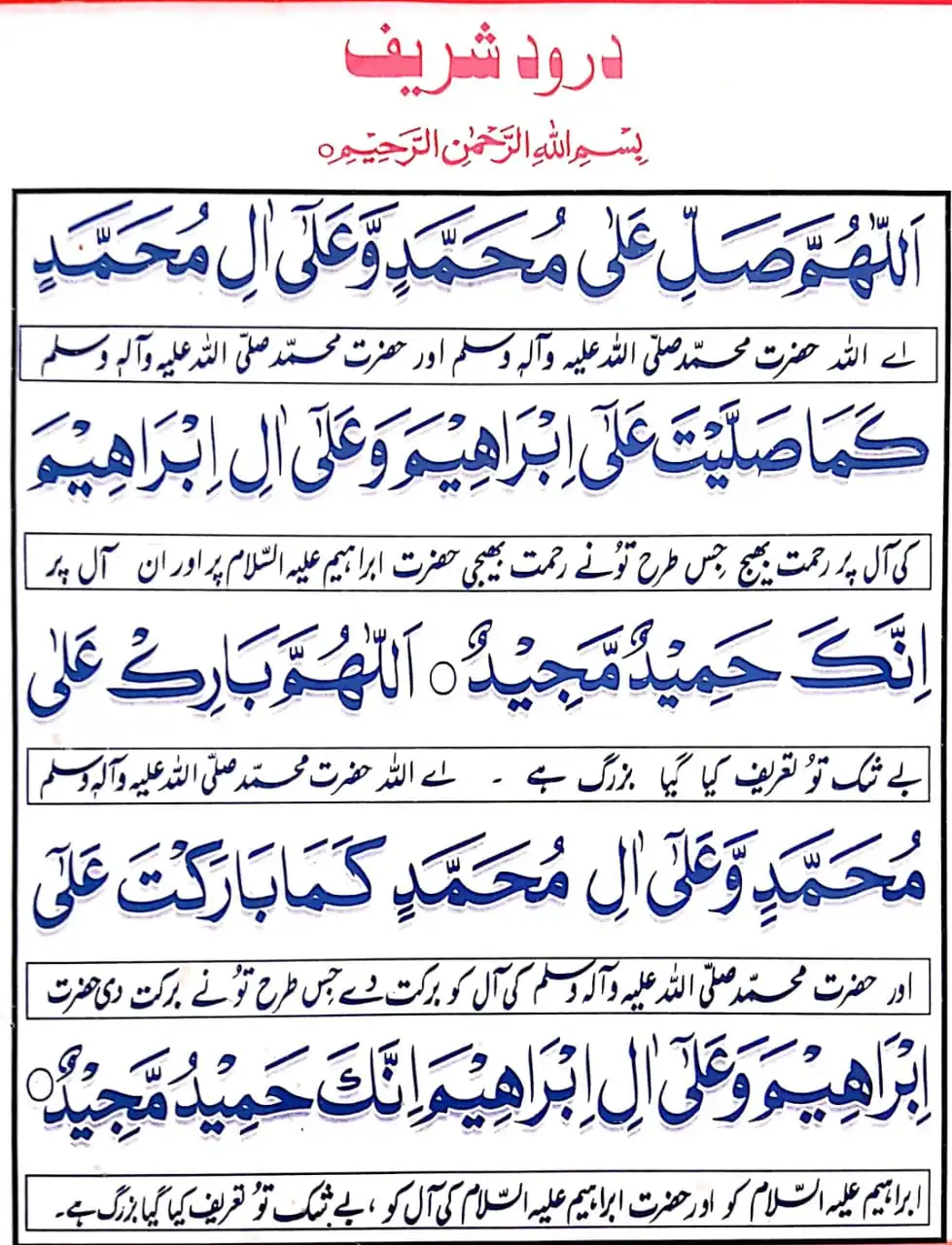
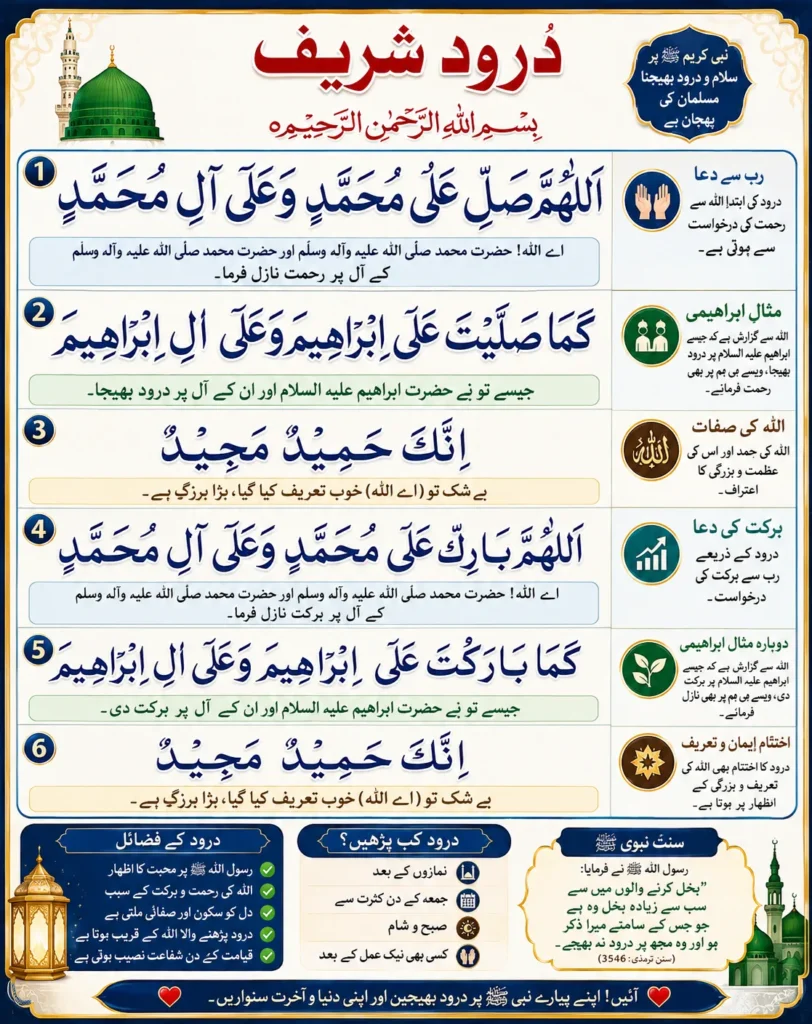
اللَّهُمَّ صَلِّ عَلَى مُحَمَّدٍ وَعَلَى آلِ مُحَمَّدٍ كَمَا صَلَّيْتَ عَلَى إِبْرَاهِيمَ وَعَلَى آلِ إِبْرَاهِيمَ، إِنَّكَ حَمِيدٌ مَجِيدٌ
اللَّهُمَّ بَارِكَ عَلَى مُحَمَّدٍ وَعَلَى آلِ مُحَمَّدٍ كَمَا بَارَكْتَ عَلَى إِبْرَاهِيمَ وَعَلَى آلِ إِبْرَاهِيمَ، إِنَّكَ حَمِيدٌ مَجِيدٌ
Transliteration
“Allaahumma salli ‘alaa Muhammadinw wa ‘alaa ‘aali Muhammad; kamaa sallayta ‘alaa ‘Ibraaheema wa ‘alaa ‘aali ‘Ibraaheem, ‘innaka Hameedum Majeed.
Allaahumma baarik ‘alaa Muhammadinw wa ‘alaa ‘aali Muhammad; kamaa baarakta ‘alaa ‘Ibraaheema wa ‘alaa ‘aali ‘Ibraaheem, ‘innaka Hameedum Majeed.”
English Translation
“O Allah, bestow Your favor on Muhammad and on the family of Muhammad as You have bestowed Your favor on Ibrahim and on the family of Ibrahim, You are Praiseworthy, Most Glorious.
O Allah, bless Muhammad and the family of Muhammad as You have blessed Ibrahim and on the family of Ibrahim, You are Praiseworthy, Most Glorious.” [Sahih Bukhari 6357]
Urdu Translation
“اے اللہ! محمد اور محمد کے خاندان پر رحمت برسا جیسے تو ابراہیم اور ابراہیم کے خاندان پر رحمت برساتا تھا۔ تو بے شک حمد اور عظمت والا ہے۔
اے اللہ! محمد اور محمد کے خاندان پر برکت برسا جیسے تو ابراہیم اور ابراہیم کے خاندان پر برکت برساتا تھا۔ تو بے شک حمد اور عظمت والا ہے۔”
Hadith Source: Sahih al-Bukhari 6357, Book of Prophets—Prophet Muhammad (ﷺ) said to Companions: “Say: Allahumma salli ‘ala Muhammad…” This is the most complete and best form of salutation.
Sahih Muslim 747: The Exact Rewards You Get Per Recitation
What the Hadith Says
“For every Durood Shareef you recite, 10 sins are forgiven, 10 good deeds are entered into your sheet of actions, and 10 positions are upgraded in heaven.” [Sahih Muslim 747]
English Translation
“جو شخص ایک بار درود شریف پڑھتا ہے، اللہ اس کے 10 گناہ معاف کرتا ہے، 10 نیکیاں اس کے کاموں کی فہرست میں لکھتا ہے، اور 10 درجات اس کی مقامت میں بڑھاتا ہے۔”
This isn’t vague spirituality—it’s quantifiable spiritual ROI. One recitation = 30 immediate benefits. Ten recitations = 300 benefits. The math is clear.
Tirmidhi: The Person Closest to Prophet (ﷺ) on Judgment Day
The Powerful Promise
“The person closest to me on the Day of Judgment will be the one who sent the most Durood on me.” [Tirmidhi]
Urdu Translation
“قیامت کے دن میرے سب سے قریب وہ شخص ہوگا جو میں نے سب سے زیادہ درود شریف پڑھا ہوگا۔”
This shifts Durood from “optional good deed” to priority spiritual investment. If you want closeness to Prophet Muhammad (ﷺ)—the ultimate goal for every Muslim—this is your most direct path.
Imam Al-Ghazali’s Insight: Durood as Spiritual Purification
The great classical scholar Imam Al-Ghazali (d. 1111 CE) explained that Durood Shareef isn’t just praise—it’s spiritual purification (tazkiyah). When you send blessings on Prophet (ﷺ), your heart becomes purified from arrogance, jealousy, and worldly attachment.
Al-Ghazali wrote in Ihya Ulum al-Din: “Durood is the key to Allah’s mercy. It softens the hardened heart and brings the believer closer to divine presence.”
For Gen-Z Muslims facing digital burnout, anxiety, and isolation, this heart-softening effect is exactly what modern life lacks.
The Modern Relevance Framework: Why Durood Matters for Gen-Z in 2026
Here’s Why This Becomes Critical Today
Gen-Z Muslims in 2026 face three unique challenges:
Durood isn’t competing with your digital life—it’s thriving inside it.
The Digital Sunnah: How Durood Shareef Works in Modern Tech
- Voice Search: Ask “Durood Ibrahim Urdu translation” on Google—your phone responds instantly
- Tasbih Apps: Count 100 recitations with digital counters (no beads needed)
- Social Media: Share Durood posts—reach millions with 10-second content
- WhatsApp Groups: Morning/evening Durood reminders in Muslim communities
- AI Overviews: Google’s AI now summarizes Durood benefits instantly
This isn’t “traditional Islam vs. technology.” This is Sunnah adapting to digital highways—exactly how Islam has spread for 1,400 years.
How Many Times Should You Recite Durood Ibrahim Daily?
Recite Durood Ibrahim 100 times daily for maximum spiritual benefits. This equals ~15 minutes total, split into morning (50) and evening (50).
Scholarly Breakdown
Practical Schedule for Busy Muslims
- After Fajr: 25 recitations
- After Dhuhr: 25 recitations
- After Maghrib: 25 recitations
- After Isha: 25 recitations
Total: 100 recitations in 15 minutes, spread across your day.
Urdu & Hindi Translation: Complete Word-by-Word Breakdown
Full Arabic + Urdu + English
| Arabic | Urdu (Transliteration) | English Meaning |
|---|---|---|
| اللَّهُمَّ | “Allaahumma” | “O Allah” |
| صَلِّ | “salli” | “bestow Your favor/blessings” |
| عَلَى مُحَمَّدٍ | “‘alaa Muhammadin” | “on Muhammad” |
| وَعَلَى آلِ مُحَمَّدٍ | “wa ‘alaa ‘aali Muhammad” | “and on the family of Muhammad” |
| كَمَا صَلَّيْتَ | “kamaa sallayta” | “as You have bestowed” |
| عَلَى إِبْرَاهِيمَ | “‘alaa ‘Ibraaheema” | “on Ibrahim” |
| وَعَلَى آلِ إِبْرَاهِيمَ | “wa ‘alaa ‘aali ‘Ibraaheem” | “and on the family of Ibrahim” |
| إِنَّكَ حَمِيدٌ مَجِيدٌ | “‘innaka Hameedum Majeed” | “You are Praiseworthy, Most Glorious” |
Hindi Translation:
“हे अल्लाह, मुहम्मद और मुहम्मद के परिवार पर अपना फ़ванны बरसाए, जैसे तुम इब्राहीम और इब्राहीम के परिवार पर फ़वनी बरसाते थे। तुम सच में सम्मानित और महान हो।”
Common Confusion: Durood Ibrahim vs. Durood Shareef—Final Clarification
People Also Ask:
Q: Are Durood Ibrahim and Durood Shareef the same?
A: Durood Ibrahim is a type of Durood Shareef, but it’s the most authentic form recited in Salah. All Durood Ibrahim = Durood Shareef, but other Durood forms exist with different wording.
Q: Can I recite other Durood Shareef instead of Durood Ibrahim?
A: Yes. All Durood Shareef brings rewards. But Durood Ibrahim is preferred in Salah because Prophet (ﷺ) taught it specifically.
Q: Is Durood Ibrahim obligatory in prayer?
A: Yes. It’s essential part of final Tashahhud. Prayer is invalid without it.
Q: How long does it take to recite 100 times?
A: About 15 minutes total (1.5 minutes per 10 recitations).
Q: Can children recite Durood Ibrahim?
A: Absolutely. Teach them age-appropriate version. Even 5-year-olds can recite 10 times daily.
Your Next Step: Start the 100-Daily Durood Habit Today
Download a free tasbih counter app and start reciting Durood Ibrahim 100 times daily today. Split it: 25 after each prayer.
Within 7 days, you’ll notice:
- Calmer mind during stress
- Stronger connection to Prophet (ﷺ)
- Immediate spiritual relief when anxiety hits
This isn’t theory. It’s proven spiritual transformation for Gen-Z Muslims in 2026.
Related Reading: Deepen Your Understanding
- Innahu Min Sulaiman Wa Innahu Bismillahirrahmanirrahim — Understanding the power of Islamic phrases
FAQ Section:
Durood Ibrahim (Salat al-Ibrahimiyyah) is the most authentic and recommended.
After every prayer, after Azan, on Fridays, and before making dua.
Arabic is preferred for Salah. For personal dua, Urdu/Hindi translations help understand meaning.
Yes. Any time you’re not in prayer, you can recite silently or aloud.
Don’t worry. Start again tomorrow. Consistency matters more than perfection.

1 thought on “Durood shareef (ibrahim) — Allahumma salli ala muhammadin”