Whether it is a sudden conflict at work, heavy traffic on your commute, or a highly stressful family argument, we all know how quickly our emotions can spike. That sudden angry feel can hijack your mind in seconds, making your chest tight, depleting your patience, and often triggering feelings that require a dua for anxiety and depression just to recover your peace.
Before reacting and saying something you might regret, it is crucial to know exactly what to read when you are anger takes over. You are not alone in feeling this way—even the greatest companions of the Prophet Muhammad (ﷺ) experienced intense frustration. Fortunately, Islam provides a beautiful, immediate emergency protocol to calm your heart, extinguish the rage, and protect your relationships.
Here is the exact step-by-step Sunnah method and how to control anger in Islam (Dua).
The Most Powerful Dua When Feeling Angry
In Islam, unchecked anger is understood to be a spark from Shaitan (Satan), designed to create chaos, break family ties, and make us act out of character. When you feel your temper rising, the very first step is to apply the spiritual brakes by seeking refuge in Allah.
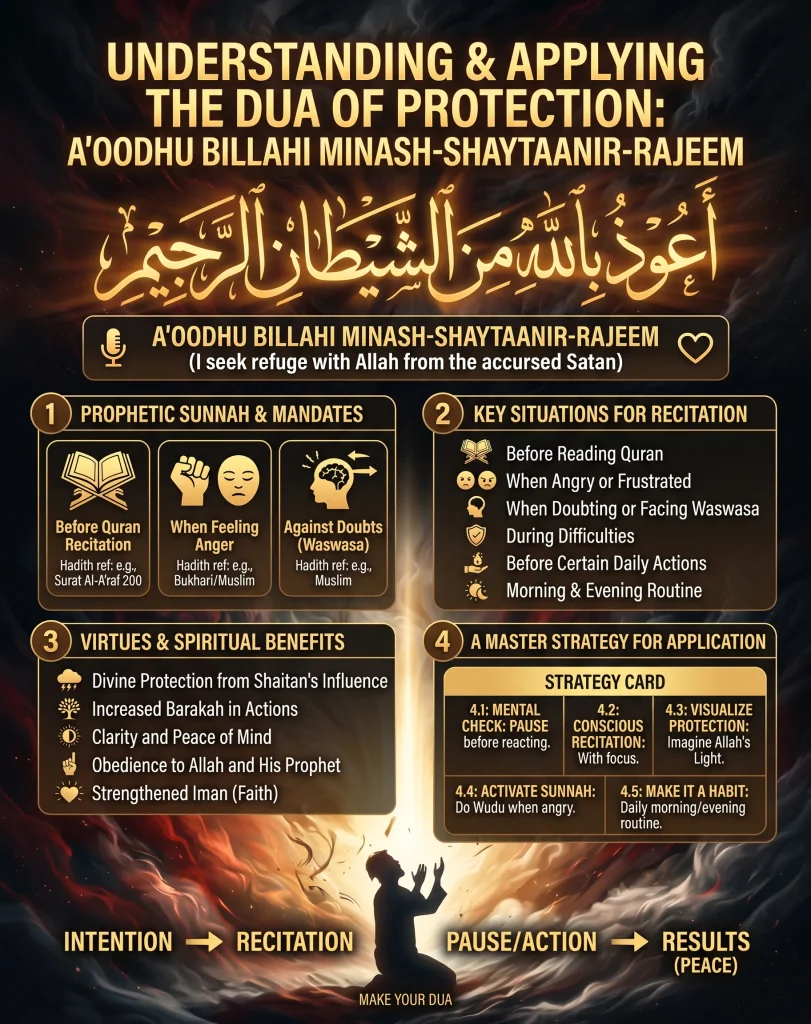
Whenever the Prophet (ﷺ) saw someone overcome with anger, he advised them to immediately recite this supplication:
Arabic:
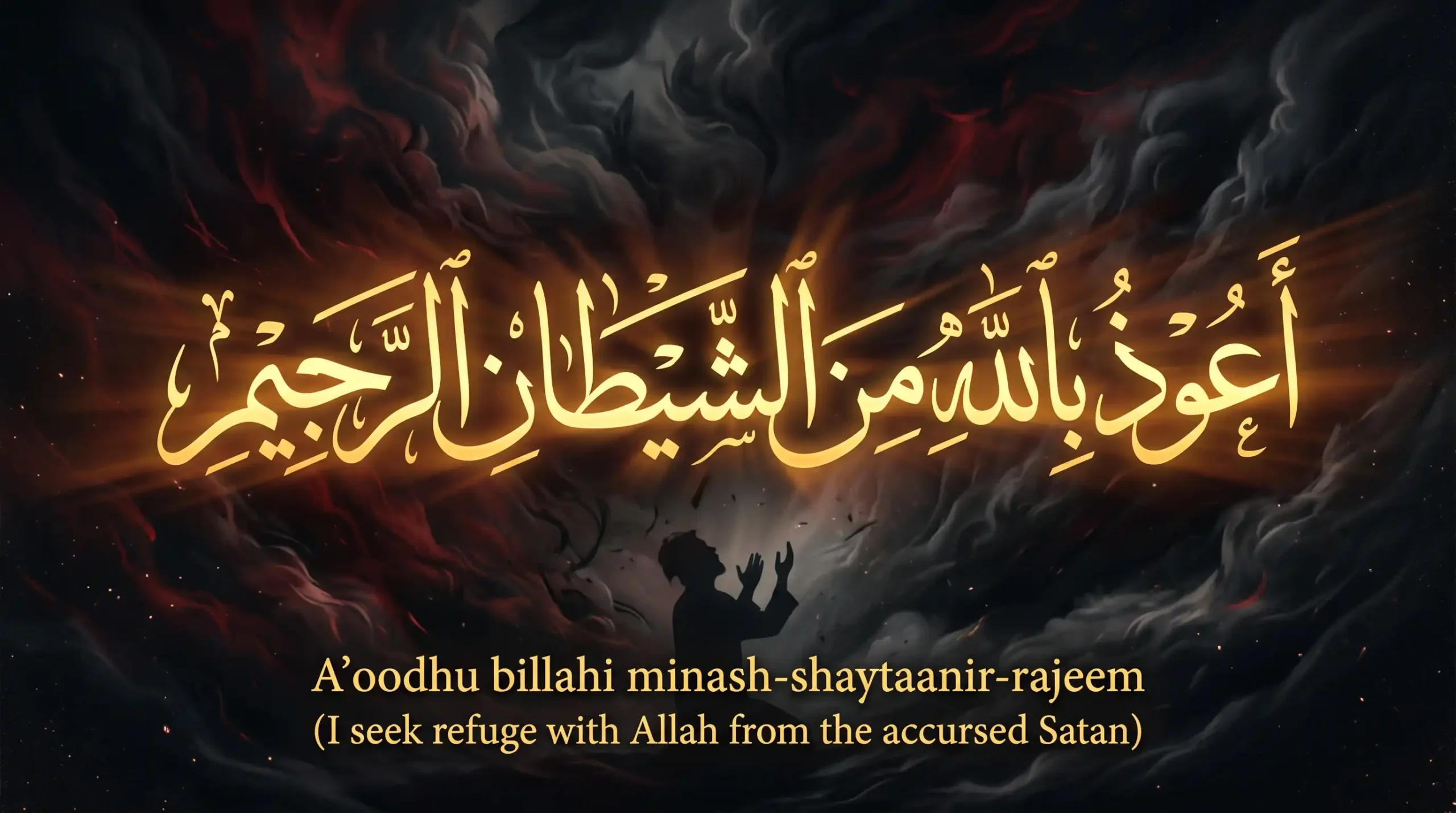
أَعُوذُ بِاللَّهِ مِنَ الشَّيْطَانِ الرَّجِيمِ
Transliteration: A’oodhu billahi minash-shaytaanir-rajeem.
English Translation: “I seek refuge with Allah from the accursed Satan.”
Reciting Auzubillah minashaitan nirajeem immediately cuts off the negative whispers fueling your rage. It shifts your focus away from the person or situation triggering you, and redirects your heart back to Allah’s protection.
The Sunnah Protocol: Practical Steps to Control Your Temper
Beyond the Dua, the Prophet Muhammad (ﷺ) gave us a brilliant physical and psychological framework to cool down. When the spiritual remedy is paired with physical action, the anger melts away.
If you are struggling to calm down, follow these essential steps:
1. Change Your Physical Posture
Adrenaline forces the body into a “fight or flight” mode. Islam beautifully disrupts this physical momentum. The Prophet (ﷺ) advised:
“If one of you gets angry while standing, let him sit down; and if his anger goes away (that is good); otherwise, let him lie down.” (Abu Dawud)
By physically lowering yourself to the ground, you force your heart rate to slow and adopt a posture of humility, which naturally neutralizes arrogance and rage.
2. Choose Silence and Patience
When we are furious, our tongues often do the most damage. Words spoken in anger cannot be taken back and can ruin years of trust. The Prophet (ﷺ) gave a simple, powerful instruction: “If one of you gets angry, let him keep quiet.”
Silence is your ultimate shield during a difficult moment. When you feel the urge to argue back, remember the powerful Quranic principle of Innallaha ma sabireen (Indeed, Allah is with the patient).
3. Wash Away the Heat (Perform Wudu)
Anger raises your body temperature, making you feel physically hot. The Prophet (ﷺ) explained that anger comes from Shaitan, who was created from fire, and fire is extinguished by water.
When you feel overwhelmed, walk away from the situation and go straight to the sink. Splash cool water on your face and arms by performing ablution, and don’t forget to recite the dua after Wudu to seal the purification. Following this, drink a cold glass of water and read the pani peene ki dua to completely reset your internal state.
Healing the Heart After Anger
Even if you successfully control an outburst, the lingering feelings of frustration can leave you feeling drained or regretful. It is highly recommended to follow up a moment of anger by reciting a dua for forgiveness (Astaghfirullah) to cleanse your heart of any negative thoughts you may have harbored.
Unchecked anger turns everyday challenges into monumental crises. By mastering your emotions through the Sunnah, you prevent a momentary feeling from turning into a life-altering event where you desperately need a mushkil waqt ki dua (dua for difficult times).
The Prophet (ﷺ) said, “The strong man is not the good wrestler; rather, the strong man is the one who controls himself when he is angry.” (Sahih al-Bukhari).
Next time you get that sudden angry feel, use these steps. True strength lies in remembering Allah, controlling your tongue, and letting the remembrance of God bring tatmainnal quloob—true peace to your heart.

1 thought on “What to Read When You Get That Angry Feel”