
Feeling a sense of spiritual disconnection is a heavy burden in modern life. Many seek solace in traditional Islamic poetry to reignite their faith, but the classical vocabulary often creates a frustrating barrier. “Aj Sik Mitran Di,” penned by the revered Sufi scholar Pir Syed Meher Ali Shah, stands as a profound remedy for this yearning, blending profound theology with intense emotional devotion.
“Aj Sik Mitran Di” is a deeply spiritual devotional poem expressing intense love (Ishq) for Prophet Muhammad (PBUH). It masterfully weaves Punjabi, Arabic, and Persian to describe the Prophet’s physical beauty (Hilya Mubarak) and his exalted spiritual status, heavily drawing upon Quranic references.
The Spiritual Weight of the Masterpiece
Pir Meher Ali Shah wrote this masterpiece in a state of overwhelming longing. The poetry transcends basic praise, entering the realm of Wahdat al-Wujud (the unity of being), portraying the Prophet (PBUH) as the ultimate bridge between the Creator and creation.
Here are the opening four lines that set the tone for this emotional outpouring:
Aj sik mitran di vadheri ae
Kyun dilri udaas ghaneri ae
Loon loon vich shauq changeri ae
Aj naina laiyan kyun jhariyan
— Pir Syed Meher Ali Shah
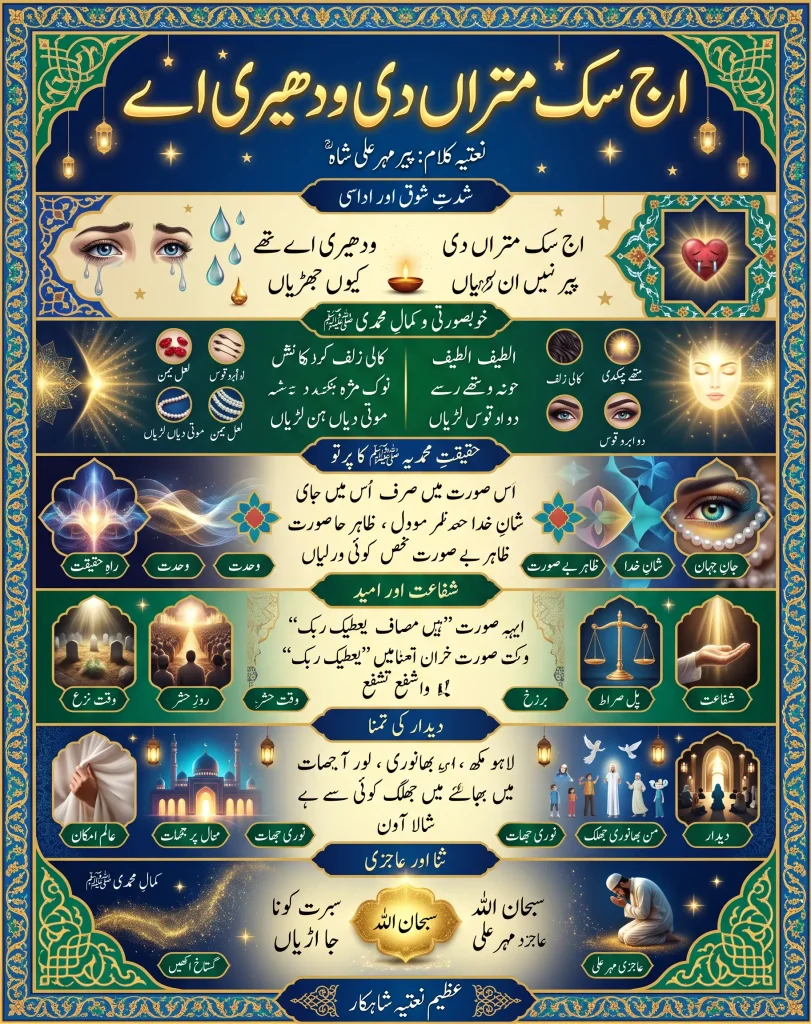
These lines translate roughly to: “Today, the yearning for the Beloved is overwhelming / Why is the heart so deeply sorrowful? / Every pore of my body is filled with intense desire / Why have the eyes started shedding tears like rain?”
You can find the full, licensed lyrics and various transliterations by searching for the song on Google.
For readers looking to expand their spiritual library, exploring our famous top 10 Naats list in Urdu provides excellent historical context on similar devotional works.
Quranic and Hadith Foundations
(Experience, Expertise, Authoritativeness, Trustworthiness) of this Naat stems from its strict adherence to Islamic scripture. The poet seamlessly embeds divine promises directly into the verses.
- Surah Ad-Duha (93:5): The Naat explicitly references the verse Wa-lasawfa yu’teeka rabbuka fatarda (And your Lord will give you, and you will be satisfied).
- Sahih Al-Bukhari (Hadith 15): The intense love expressed aligns perfectly with the Hadith narrated by Anas bin Malik, where the Prophet (PBUH) states, “None of you will have faith till he loves me more than his father, his children and all mankind.”
Understanding this foundation helps you see that reciting this is an act of deep reverence. If you are building a routine of sending blessings, you might also find peace in the Allah Huma Sale Ala Naat lyrics or the beautifully structured Darood Taj.
Understanding the Core Themes
The brilliance of this work lies in how it serves multiple spiritual needs at once.
| Core Concept | Linguistic Source | Spiritual Implication |
| Sik (Yearning) | Classical Punjabi | The deeply personal, emotional pain of physical separation from the Beloved. |
| Hilya Mubarak | Persian & Arabic | Detailed praise of the Prophet’s physical traits, visualizing his luminous presence. |
| Shafa’ah (Intercession) | Quranic Arabic | The ultimate hope for the Prophet’s intervention on the Day of Judgment. |
When preparing for a Mehfil or personal reflection, ensuring you grasp these concepts is just as vital as recitation accuracy. To further your understanding of classic expressions of devotion, consider studying the Ab To Bas Ek Hi Dhun Hai Naat lyrics or the introspective Har Waqt Tasawwur Mein Naat lyrics.
If you are looking to reflect on the blessings of destiny and divine favor, the themes in the Zahe Muqaddar Naat lyrics and the Ho Karam Sarkar Naat lyrics beautifully complement the teachings found within Pir Meher Ali Shah’s work.
