By Shahab Khan · Reviewed by Atif Khan · Last reviewed: [October ,1, 2026]
It is 3:40 a.m. You wake up, and your first thought is guilt. You meant to pray tahajjud (the voluntary night prayer). Your body says no. Then you remember a forward that said the last 10 ayat of Surah Al Imran change everything, with a count nobody sourced.
The last 10 ayat of Surah Al Imran are verses 190 to 200 of the third chapter of the Quran. Ayat means verses. The Prophet ﷺ recited them on waking at night (Sahih Muslim 763). The authentic practice is short and kind. This guide gives you the verses, their meaning, and a four-step routine called the Midnight Reset.
[SCHOLAR ANECDOTE: insert a real story from Shahab Khan about waking at night or learning these verses]
Quick Answer
- What: Surah Al Imran 3:190–200, closing verses of reflection and dua (supplication).
- When: On waking at night, as the Prophet ﷺ did (Sahih Muslim 763).
- How many times: The report gives no count. Read once, slowly, with meaning.
Contents
- What are the last 10 ayat?
- The verses: Arabic, transliteration, meaning
- Why did the Prophet ﷺ recite them at night?
- How many times? Is there a wazifa?
- What are the benefits?
- The Midnight Reset
- Work, school, and the commute
- Common mistakes
- FAQ
- Your next step
What are the last 10 ayat of Surah Al Imran?
They are verses 190 to 200 of Surah Al Imran, the third chapter of the Quran. The passage opens with a call to reflect on creation, continues with a series of duas (supplications), and ends with a command to be patient and mindful of Allah.
Al Imran is a Medinan surah, revealed after the Hijrah (the Prophet’s ﷺ migration to Medina). It has 200 verses. The closing passage reads as one unit. It moves from looking at the sky, to speaking to Allah, to hearing His reply in verse 195, to a final instruction in verse 200.
Why is it called 10 ayat when 3:190–200 has eleven?
The hadith says “ten verses,” but the standard printed numbering counts eleven from 3:190 to 3:200. Most guides present the whole passage. The classical explanation for the difference needs scholarly confirmation. [VERIFY: Ibn Hajar, Fath al-Bari, or another classical source.]
The verses: Arabic, transliteration, and meaning
English: Sahih International [VERIFY: reuse terms]. Urdu: Fateh Muhammad Jalandhari wording, taken from surahquran.com [VERIFY against a printed edition]. Hindi: text from bharatdiscovery.org, translator NOT named there [VERIFY translator, licence and wording before publishing]. Arabic and every translation line must be checked by Atif Khan before publishing.
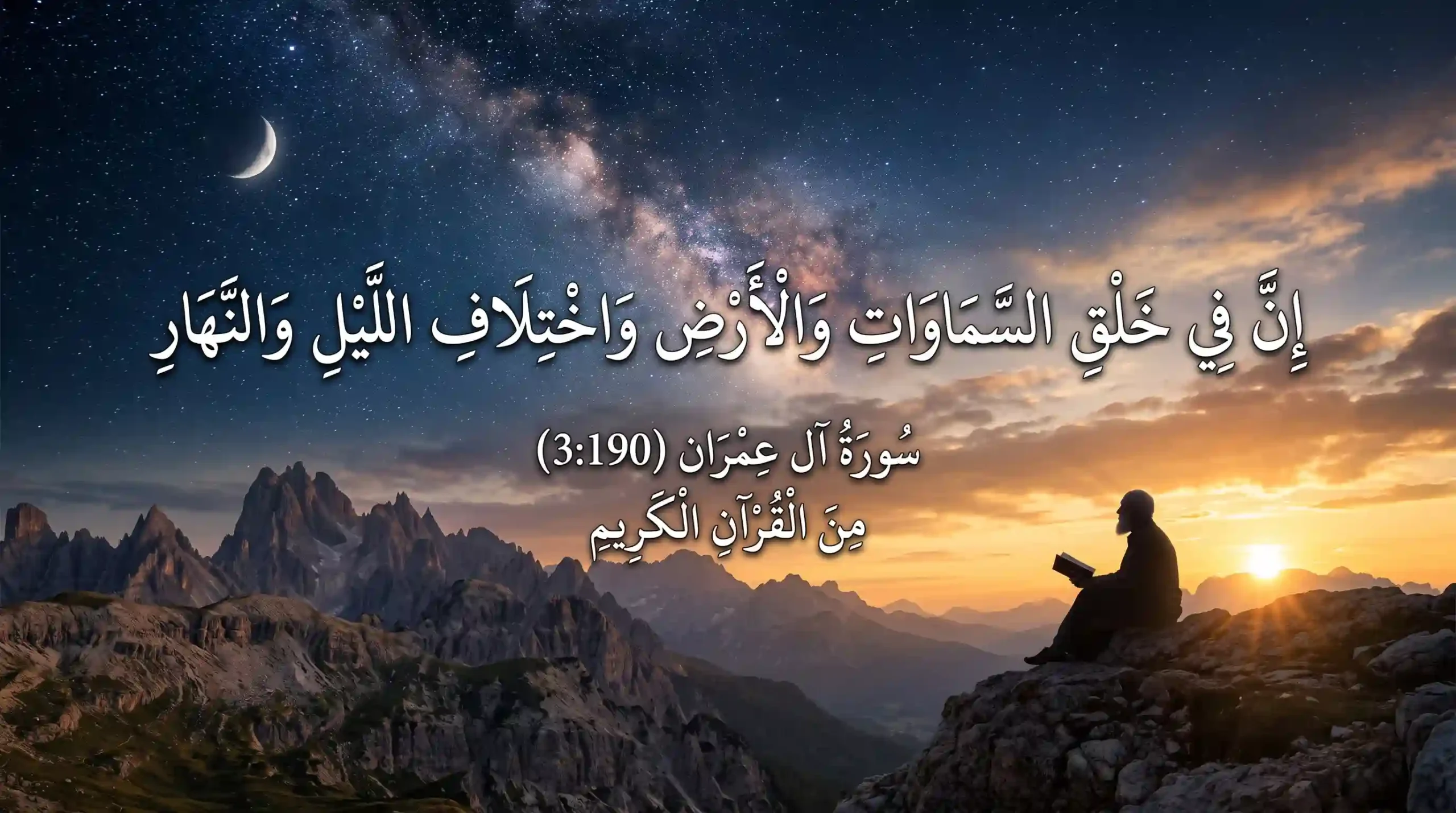
Surah Al Imran 3:190
إِنَّ فِي خَلْقِ السَّمَاوَاتِ وَالْأَرْضِ وَاخْتِلَافِ اللَّيْلِ وَالنَّهَارِ لَآيَاتٍ لِّأُولِي الْأَلْبَابِ
Inna fī khalqis-samāwāti wal-arḍi wakhtilāfil-layli wan-nahāri laāyātin li-ulil-albāb.
Indeed, in the creation of the heavens and the earth and the alternation of the night and the day are signs for those of understanding.
بے شک آسمانوں اور زمین کی پیدائش اور رات اور دن کے بدل بدل کے آنے جانے میں عقل والوں کے لیے نشانیاں ہیں
इसमें तो शक ही नहीं कि आसमानों और ज़मीन की पैदाइश और रात दिन के फेर बदल में अक्लमन्दों के लिए (क़ुदरत ख़ुदा की) बहुत सी निशानियॉ हैं
Surah Al Imran 3:191
الَّذِينَ يَذْكُرُونَ اللَّهَ قِيَامًا وَقُعُودًا وَعَلَىٰ جُنُوبِهِمْ وَيَتَفَكَّرُونَ فِي خَلْقِ السَّمَاوَاتِ وَالْأَرْضِ رَبَّنَا مَا خَلَقْتَ هَٰذَا بَاطِلًا سُبْحَانَكَ فَقِنَا عَذَابَ النَّارِ
Alladhīna yadhkurūnallāha qiyāman wa qu‘ūdan wa ‘alā junūbihim wa yatafakkarūna fī khalqis-samāwāti wal-arḍ, Rabbanā mā khalaqta hādhā bāṭilā, subḥānaka faqinā ‘adhāban-nār.
Who remember Allah while standing or sitting or [lying] on their sides and give thought to the creation of the heavens and the earth, [saying], “Our Lord, You did not create this aimlessly; exalted are You [above such a thing]; then protect us from the punishment of the Fire.
جو کھڑے اور بیٹھے اور لیٹے (ہر حال میں) خدا کو یاد کرتے اور آسمان اور زمین کی پیدائش میں غور کرتے (اور کہتے ہیں) کہ اے پروردگار! تو نے اس (مخلوق) کو بے فائدہ نہیں پیدا کیا تو پاک ہے تو (قیامت کے دن) ہمیں دوزخ کے عذاب سے بچائیو
जो लोग उठते बैठते करवट लेते (अलगरज़ हर हाल में) ख़ुदा का ज़िक्र करते हैं और आसमानों और ज़मीन की बनावट में ग़ौर व फ़िक्र करते हैं और (बेसाख्ता) कह उठते हैं कि ख़ुदावन्दा तूने इसको बेकार पैदा नहीं किया तू (फेले अबस से) पाक व पाकीज़ा है बस हमको दोज़ख़ के अज़ाब से बचा
Surah Al Imran 3:192
رَبَّنَا إِنَّكَ مَن تُدْخِلِ النَّارَ فَقَدْ أَخْزَيْتَهُ ۖ وَمَا لِلظَّالِمِينَ مِنْ أَنصَارٍ
Rabbanā innaka man tudkhilin-nāra faqad akhzaytahu, wa mā liẓ-ẓālimīna min anṣār.
Our Lord, indeed whoever You admit to the Fire – You have disgraced him, and for the wrongdoers there are no helpers.
اے پروردگار جس کو تو نے دوزخ میں ڈالا اسے رسوا کیا اور ظالموں کا کوئی مددگار نہیں
ऐ हमारे पालने वाले जिसको तूने दोज़ख़ में डाला तो यक़ीनन उसे रूसवा कर डाला और जुल्म करने वाले का कोई मददगार नहीं
Surah Al Imran 3:193
رَّبَّنَا إِنَّنَا سَمِعْنَا مُنَادِيًا يُنَادِي لِلْإِيمَانِ أَنْ آمِنُوا بِرَبِّكُمْ فَآمَنَّا ۚ رَبَّنَا فَاغْفِرْ لَنَا ذُنُوبَنَا وَكَفِّرْ عَنَّا سَيِّئَاتِنَا وَتَوَفَّنَا مَعَ الْأَبْرَارِ
Rabbanā innanā sami‘nā munādiyan yunādī lil-īmāni an āminū bi-rabbikum fa-āmannā. Rabbanā faghfir lanā dhunūbanā wa kaffir ‘annā sayyi’ātinā wa tawaffanā ma‘al-abrār.
Our Lord, indeed we have heard a caller [i.e., Prophet Muḥammad ﷺ] calling to faith, [saying], ‘Believe in your Lord,’ and we have believed. Our Lord, so forgive us our sins and remove from us our misdeeds and cause us to die among the righteous.
اے پروردگار ہم نے ایک ندا کرنے والے کو سنا کہ ایمان کے لیے پکار رہا تھا (یعنی) اپنے پروردگار پر ایمان لاؤ تو ہم ایمان لے آئے اے پروردگار ہمارے گناہ معاف فرما اور ہماری برائیوں کو ہم سے محو کر اور ہم کو دنیا سے نیک بندوں کے ساتھ اٹھا
ऐ हमारे पालने वाले (जब) हमने एक आवाज़ लगाने वाले (पैग़म्बर) को सुना कि वह (ईमान के वास्ते यूं पुकारता था) कि अपने परवरदिगार पर ईमान लाओ तो हम ईमान लाए पस ऐ हमारे पालने वाले हमें हमारे गुनाह बख्श दे और हमारी बुराईयों को हमसे दूर कर दे और हमें नेकों के साथ (दुनिया से) उठा ले
Surah Al Imran 3:194
رَبَّنَا وَآتِنَا مَا وَعَدتَّنَا عَلَىٰ رُسُلِكَ وَلَا تُخْزِنَا يَوْمَ الْقِيَامَةِ ۗ إِنَّكَ لَا تُخْلِفُ الْمِيعَادَ
Rabbanā wa ātinā mā wa‘attanā ‘alā rusulika wa lā tukhzinā yawmal-qiyāmah, innaka lā tukhliful-mī‘ād.
Our Lord, and grant us what You promised us through Your messengers and do not disgrace us on the Day of Resurrection. Indeed, You do not fail in [Your] promise.
اے پروردگار تو نے جن جن چیزوں کے ہم سے اپنے پیغمبروں کے ذریعے سے وعدے کیے ہیں وہ ہمیں عطا فرما اور قیامت کے دن ہمیں رسوا نہ کیجو کچھ شک نہیں کہ تو خلاف وعدہ نہیں کرتا
और ऐ पालने वाले अपने रसूलों की मार्फत जो कुछ हमसे वायदा किया है हमें दे और हमें क़यामत के दिन रूसवा न कर तू तो वायदा ख़िलाफ़ी करता ही नहीं
Surah Al Imran 3:195
فَاسْتَجَابَ لَهُمْ رَبُّهُمْ أَنِّي لَا أُضِيعُ عَمَلَ عَامِلٍ مِّنكُم مِّن ذَكَرٍ أَوْ أُنثَىٰ ۖ بَعْضُكُم مِّن بَعْضٍ ۖ فَالَّذِينَ هَاجَرُوا وَأُخْرِجُوا مِن دِيَارِهِمْ وَأُوذُوا فِي سَبِيلِي وَقَاتَلُوا وَقُتِلُوا لَأُكَفِّرَنَّ عَنْهُمْ سَيِّئَاتِهِمْ وَلَأُدْخِلَنَّهُمْ جَنَّاتٍ تَجْرِي مِن تَحْتِهَا الْأَنْهَارُ ثَوَابًا مِّنْ عِندِ اللَّهِ ۗ وَاللَّهُ عِندَهُ حُسْنُ الثَّوَابِ
Fastajāba lahum Rabbuhum annī lā uḍī‘u ‘amala ‘āmilin minkum min dhakarin aw unthā, ba‘ḍukum min ba‘ḍ. Fal-ladhīna hājarū wa ukhrijū min diyārihim wa ūdhū fī sabīlī wa qātalū wa qutilū la-ukaffiranna ‘anhum sayyi’ātihim wa la-udkhilannahum jannātin tajrī min taḥtihal-anhār, thawāban min ‘indillāh. Wallāhu ‘indahu ḥusnuth-thawāb.
And their Lord responded to them, “Never will I allow to be lost the work of [any] worker among you, whether male or female; you are of one another. So those who emigrated or were evicted from their homes or were harmed in My cause or fought or were killed – I will surely remove from them their misdeeds, and I will surely admit them to gardens beneath which rivers flow as reward from Allah, and Allah has with Him the best reward.”
تو ان کے پروردگار نے ان کی دعا قبول کر لی (اور فرمایا) کہ میں کسی عمل کرنے والے کے عمل کو مرد ہو یا عورت ضائع نہیں کرتا تم ایک دوسرے کی جنس ہو تو جو لوگ میرے لیے وطن چھوڑ گئے اور اپنے گھروں سے نکالے گئے اور ستائے گئے اور لڑے اور قتل کیے گئے میں ان کے گناہ دور کردوں گا اور ان کو بہشتوں میں داخل کروں گا جن کے نیچے نہریں بہہ رہی ہیں (یہ) خدا کے ہاں سے بدلہ ہے اور خدا کے ہاں اچھا بدلہ ہے
तो उनके परवरदिगार ने दुआ कुबूल कर ली और (फ़रमाया) कि हम तुममें से किसी काम करने वाले के काम को अकारत नहीं करते मर्द हो या औरत (उस में कुछ किसी की खुसूसियत नहीं क्योंकि) तुम एक दूसरे (की जिन्स) से हो जो लोग (हमारे लिए वतन आवारा हुए) और शहर बदर किए गए और उन्होंने हमारी राह में अज़ीयतें उठायीं और (कुफ्फ़ार से) जंग की और शहीद हुए मैं उनकी बुराईयों से ज़रूर दरगुज़र करूंगा और उन्हें बेहिश्त के उन बाग़ों में ले जाऊॅगा जिनके नीचे नहरें जारी हैं ख़ुदा के यहॉ ये उनके किये का बदला है और ख़ुदा (ऐसा ही है कि उस) के यहॉ तो अच्छा ही बदला है
Surah Al Imran 3:196
لَا يَغُرَّنَّكَ تَقَلُّبُ الَّذِينَ كَفَرُوا فِي الْبِلَادِ
Lā yaghurrannaka taqallubul-ladhīna kafarū fil-bilād.
Be not deceived by the [uninhibited] movement of the disbelievers throughout the land.
(اے پیغمبر) کافروں کا شہروں میں چلنا پھرنا تمہیں دھوکا نہ دے
(ऐ रसूल) काफ़िरों का शहरों शहरों चैन करते फिरना तुम्हे धोखे में न डाले
Surah Al Imran 3:197
مَتَاعٌ قَلِيلٌ ثُمَّ مَأْوَاهُمْ جَهَنَّمُ ۚ وَبِئْسَ الْمِهَادُ
Matā‘un qalīl, thumma ma’wāhum jahannam, wa bi’sal-mihād.
[It is but] a small enjoyment; then their [final] refuge is Hell, and wretched is the resting place.
(یہ دنیا کا) تھوڑا سا فائدہ ہے پھر (آخرت میں) تو ان کا ٹھکانا دوزخ ہے اور وہ بری جگہ ہے
ये चन्द रोज़ा फ़ायदा हैं फिर तो (आख़िरकार) उनका ठिकाना जहन्नुम ही है और क्या ही बुरा ठिकाना है
Surah Al Imran 3:198
لَٰكِنِ الَّذِينَ اتَّقَوْا رَبَّهُمْ لَهُمْ جَنَّاتٌ تَجْرِي مِن تَحْتِهَا الْأَنْهَارُ خَالِدِينَ فِيهَا نُزُلًا مِّنْ عِندِ اللَّهِ ۗ وَمَا عِندَ اللَّهِ خَيْرٌ لِّلْأَبْرَارِ
Lākinil-ladhīnat-taqaw rabbahum lahum jannātun tajrī min taḥtihal-anhāru khālidīna fīhā nuzulan min ‘indillāh. Wa mā ‘indallāhi khayrun lil-abrār.
But those who feared their Lord will have gardens beneath which rivers flow, abiding eternally therein, as accommodation from Allah. And that which is with Allah is best for the righteous.
لیکن جو لوگ اپنے پروردگار سے ڈرتے رہے ان کے لیے باغ ہے جن کے نیچے نہریں بہہ رہی ہیں (اور) ان میں ہمیشہ رہیں گے (یہ) خدا کے ہاں سے (ان کی) مہمانی ہے اور جو کچھ خدا کے ہاں ہے وہ نیکو کاروں کے لیے بہت اچھا ہے
मगर जिन लोगों ने अपने परवरदिगार की परहेज़गारी (इख्तेयार की उनके लिए बेहिश्त के) वह बाग़ात हैं जिनके नीचे नहरें जारीं हैं और वह हमेशा उसी में रहेंगे ये ख़ुदा की तरफ़ से उनकी (दावत है और जो साज़ो सामान) ख़ुदा के यहॉ है वह नेको कारों के वास्ते दुनिया से कहीं बेहतर है
Surah Al Imran 3:199
وَإِنَّ مِنْ أَهْلِ الْكِتَابِ لَمَن يُؤْمِنُ بِاللَّهِ وَمَا أُنزِلَ إِلَيْكُمْ وَمَا أُنزِلَ إِلَيْهِمْ خَاشِعِينَ لِلَّهِ لَا يَشْتَرُونَ بِآيَاتِ اللَّهِ ثَمَنًا قَلِيلًا ۗ أُولَٰئِكَ لَهُمْ أَجْرُهُمْ عِندَ رَبِّهِمْ ۗ إِنَّ اللَّهَ سَرِيعُ الْحِسَابِ
Wa inna min ahlil-kitābi la-man yu’minu billāhi wa mā unzila ilaykum wa mā unzila ilayhim khāshi‘īna lillāhi lā yashtarūna bi-āyātillāhi thamanan qalīlā. Ulā’ika lahum ajruhum ‘inda rabbihim. Innallāha sarī‘ul-ḥisāb.
And indeed, among the People of the Scripture are those who believe in Allah and what was revealed to you and what was revealed to them, [being] humbly submissive to Allah. They do not exchange the verses of Allah for a small price. Those will have their reward with their Lord. Indeed, Allah is swift in account.
اور بعض اہلِ کتاب ایسے بھی ہیں جو خدا پر اور اس (کتاب) پر جو تم پر نازل ہوئی اور اس پر جو ان پر نازل ہوئی ایمان رکھتے ہیں اور خدا کے آگے عاجزی کرتے ہیں اور خدا کی آیتوں کے بدلے تھوڑی سی قیمت نہیں لیتے یہی لوگ ہیں جن کا صلہ ان کے پروردگار کے ہاں تیار ہے اور خدا جلد حساب لینے والا ہے
और अहले किताब में से कुछ लोग तो ऐसे ज़रूर हैं जो ख़ुदा पर और जो (किताब) तुम पर नाज़िल हुई और जो (किताब) उनपर नाज़िल हुई (सब पर) ईमान रखते हैं ख़ुदा के आगे सर झुकाए हुए हैं और ख़ुदा की आयतों के बदले थोड़ी सी क़ीमत (दुनियावी फ़ायदे) नहीं लेते ऐसे ही लोगों के वास्ते उनके परवरदिगार के यहॉ अच्छा बदला है बेशक ख़ुदा बहुत जल्द हिसाब करने वाला है
Surah Al Imran 3:200
يَا أَيُّهَا الَّذِينَ آمَنُوا اصْبِرُوا وَصَابِرُوا وَرَابِطُوا وَاتَّقُوا اللَّهَ لَعَلَّكُمْ تُفْلِحُونَ
Yā ayyuhal-ladhīna āmanuṣ-birū wa ṣābirū wa rābiṭū wattaqullāha la‘allakum tufliḥūn.
O you who have believed, persevere and endure and remain stationed and fear Allah that you may be successful.
اے اہل ایمان (کفار کے مقابلے میں) ثابت قدم رہو اور استقامت رکھو اور مورچوں پر جمے رہو اور خدا سے ڈرو تاکہ مراد حاصل کرو
ऐ ईमानदारों (दीन की तकलीफ़ों को) और दूसरों को बर्दाश्त की तालीम दो और (जिहाद के लिए) कमरें कस लो और ख़ुदा ही से डरो ताकि तुम अपनी दिली मुराद पाओ
Word-by-word: verse 3:190
| Arabic | Transliteration | Meaning |
|---|---|---|
| إِنَّ | Inna | Indeed |
| فِي | fī | in |
| خَلْقِ | khalqi | the creation of |
| السَّمَاوَاتِ | as-samāwāti | the heavens |
| وَالْأَرْضِ | wal-arḍi | and the earth |
| وَاخْتِلَافِ | wakhtilāfi | and the alternation of |
| اللَّيْلِ | al-layli | the night |
| وَالنَّهَارِ | wan-nahāri | and the day |
| لَآيَاتٍ | laāyātin | surely signs |
| لِّأُولِي | li-ūlī | for those of |
| الْأَلْبَابِ | al-albāb | understanding |
Surah Al Imran last 10 ayat PDF
Why did the Prophet ﷺ recite them at night?
Sahih Muslim 763 reports that he woke around midnight, wiped sleep from his face, and recited the closing verses of Surah Al Imran. He then made wudu (ritual washing) and prayed. Ibn Abbas, who stayed the night there, reported this.
Ibn Abbas was a boy staying with his aunt Maymunah, a wife of the Prophet ﷺ. He watched closely. That is why we know the order: wake, wipe, recite, wash, pray. Scholars take from this that reciting these verses on waking is recommended. [VERIFY: cite a classical commentator, such as Nawawi on Sahih Muslim.]
Hadith
[VERIFY: paste Arabic text with tashkeel from Sunnah.com, Sahih Muslim 763]
Source: Sahih Muslim 763 · Grading: Sahih (in Sahih Muslim) · [HADITH EDITION: Sunnah.com numbering; confirm sub-number]
How many times should you recite them? Is there a wazifa?
The authentic report mentions no repetition count. It describes one recitation on waking, followed by wudu and prayer. Fixed numbers or special wazifas (set recitations for a goal) found online need a named, authentic source. Without one, treat them as personal custom, not Sunnah.
You may see claims about wealth, marriage, or cures. We did not find an authentic source for these claims for this passage. [VERIFY: reviewer to confirm.] If a page gives a source, check its grading before you act on it.
| Claim you may see | What the sources say | Status |
|---|---|---|
| Recite on waking at night | Sahih Muslim 763 | Established |
| Recite a fixed number of times (3, 7, 11, 41…) | No count in the report | Not established [VERIFY] |
| Special wazifa for money, marriage, or cure | No authentic source found | Unverified [VERIFY] |
| Surah Al Imran pleads for those who lived by it | Sahih Muslim 805 | Established (about the whole surah) |
What are the benefits of reciting these verses?
The clearest benefit is following the Prophet’s ﷺ example on waking. The verses also train the heart to reflect, ask forgiveness, and stay patient. Sahih Muslim 805 describes Surah Al Imran, with Al Baqarah, pleading on the Day of Judgment for those who lived by it.
That report is about the whole surah, not only these verses. Notice the order in verse 191: reflection first, then the plea for protection. For a similar night habit, read the last two verses of Surah Baqarah. For forgiveness, see this forgiveness dua from Al Imran.
We make no medical claims. Dua complements professional care and never replaces it. If night waking comes with worry or poor sleep, speak to a doctor, and read our Islamic guide to anxiety.
What is the Midnight Reset?
The Midnight Reset is a four-step night routine built from Sahih Muslim 763: Wipe the sleep from your face, Recite the verses, Wash with wudu, Rise to pray. The sequence comes from the hadith. The name and the short version are ours.
- Wipe. Rub the sleep from your face with your hand, as the report describes. Add the dua after waking up if you know it.
- Recite. Read 3:190–200 slowly. If you are tired, begin with 3:190–191. Read the meaning, not only the Arabic.
- Wash. Make wudu. Finish with the dua after wudu.
- Rise. Pray. Two rakat (units of prayer) is a good start. See how to pray tahajjud when you want more.
Start tonight
Put a copy of 3:190–191 beside your bed. Before sleeping, say your bedtime duas. When you wake, wipe your face, read those two verses, make wudu, and pray two rakat. Add one verse each week. New to supplication? Start with how to make dua.
Tired? Verse 191 itself describes remembering Allah standing, sitting, and lying on your sides. You can begin gently.
How can you use these verses at work, school, or on the commute?
Use verse 190 as a thirty-second pause. Look at the sky, a tree, or the sunrise through a train window. Remember Who made it. You do not need privacy, a prayer mat, or anyone’s permission. This is reflection, not a fixed ritual.
Being the only Muslim in the room can feel lonely. Verse 191 describes believers who remember Allah in every posture. Remembrance is not tied to one place. Night-shift workers and new parents can use their own waking moment. Patience is the theme of verse 200, and our page on Al Imran verse 139 shares that spirit of hope.
What mistakes do people make with these verses?
The most common mistakes are chasing an unsourced count, reading without knowing the meaning, and treating the verses as a charm instead of a conversation with Allah. Another is quitting after one missed night. Start again at the next waking.
Two more. Do not skip the prayer: the report ends with wudu and prayer, not recitation alone. And do not shame yourself or others about night prayer. It is voluntary.
FAQ
Which verses are the last 10 ayat of Surah Al Imran?
They are Surah Al Imran 3:190 to 3:200, from “Inna fi khalqis-samawati wal-ard” to “la‘allakum tufliḥūn.” The hadith says ten verses, while the standard numbering gives eleven. Most guides present the whole passage, so read from 190 to the end of the surah.
When should I recite the last 10 ayat of Surah Al Imran?
The established practice is on waking during the night, before wudu and prayer, as in Sahih Muslim 763. You may also read the verses at other times as Quran recitation. Do not claim a special reward for other times without a source.
Do I need wudu to read these verses?
Reciting from memory without wudu is allowed according to the majority of scholars. Many scholars require wudu to touch a printed mushaf (Quran copy). Opinions vary by school of thought. [VERIFY: reviewer to confirm per the scholar’s madhhab.] In the hadith, the Prophet ﷺ recited first, then made wudu.
What does “Inna fi khalqis-samawati wal-ard” mean?
It means “Indeed, in the creation of the heavens and the earth and the alternation of night and day are signs for people of understanding” (3:190). The verse invites you to look at the sky and the daily cycle, and to see them as signs of Allah.
What if I cannot wake up at night?
Start with what you can. Read 3:190–191 after Fajr or before sleep, and ask Allah to help you wake. Do not carry guilt. Fajr prayer on time is the priority, and night prayer is voluntary. Small steps build a lasting habit.
Which translations does this page use?
The English is Sahih International. The Urdu follows Fateh Muhammad Jalandhari’s published translation. The Hindi follows a named published edition [VERIFY: translator and edition]. Each line is checked before publishing. If you spot an error, tell us so we can correct it.
Save this: the Midnight Reset card
☐ Wipe the sleep from your face
☐ Recite 3:190–191 (or 3:190–200)
☐ Wash: make wudu
☐ Rise: pray two rakat
Download the printable Midnight Reset PDF
Your next step
- Print the card and place it by your bed.
- Read the verses with meaning on Quran.com and check the hadith on Sunnah.com. [VERIFY: exact page]
- Learn the prayer: how to pray tahajjud.
Written in the voice of Shahab Khan. Pending scholar and Arabic review by Atif Khan. This article offers general religious education, not medical advice.
