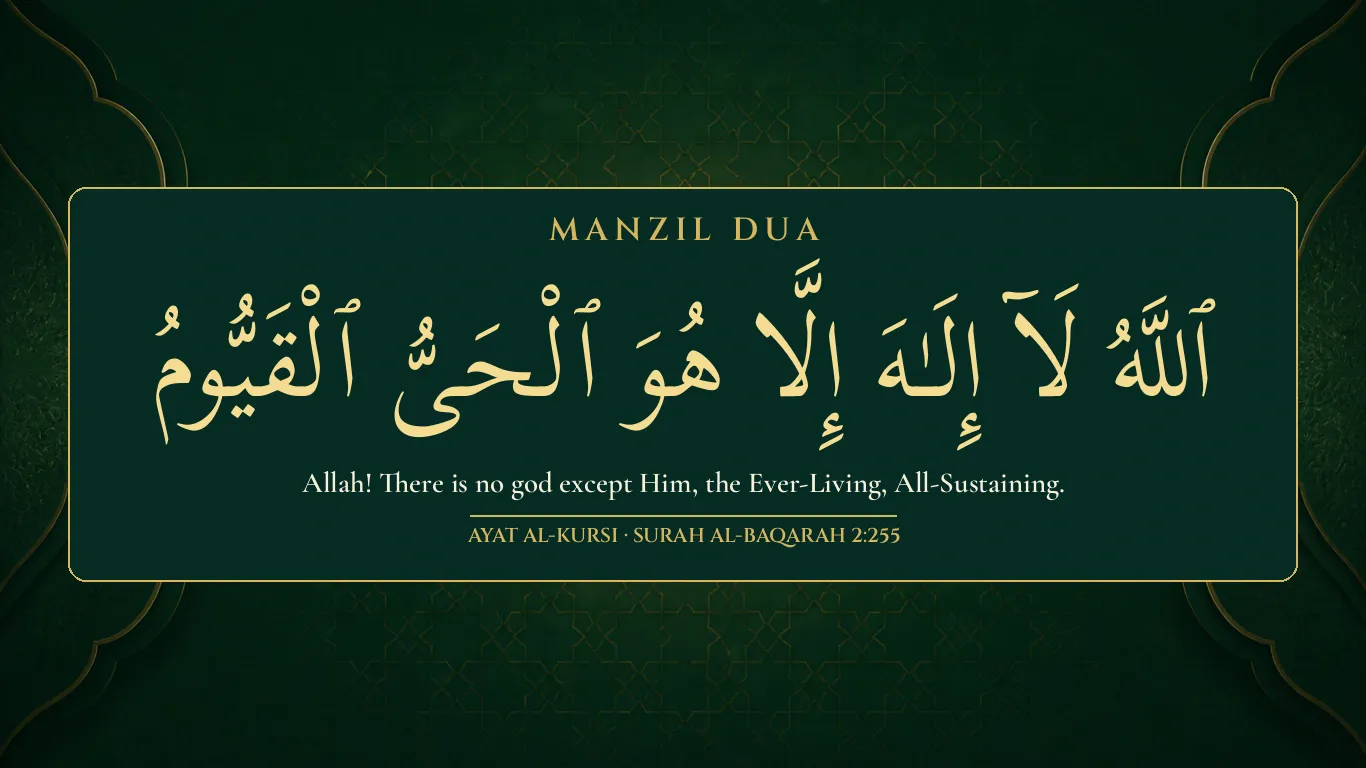
Quick Answer
Manzil Dua is a set of Quranic verses from 14 surahs, read in one sitting as protection and ruqyah. This page gives the complete text in Arabic with transliteration and English, Urdu and Hindi meaning, the real benefits, and the booklet’s method: once or three times, morning and evening.
What is Manzil Dua?
Manzil Dua is a collection of verses and short surahs from the Quran, gathered in a small booklet and read as ruqyah: protection from magic (sihr), jinn, the evil eye and other harms. It is not a surah of the Quran, and it is not a dua the Prophet ﷺ taught as one fixed set. Every word of it is Quran; the gathering of the words into this order is the work of scholars.
The verses were already read for protection in the family of Shaykh al-Hadith Muhammad Zakariyya al-Kandhlavi, who collected them in book form. Behind the family practice stands the recommendation of Shah Waliullah al-Dehlawi in Al-Qawlul Jameel, and behind the verses themselves stands a report in Mustadrak al-Hakim (4:413): the Prophet ﷺ recited a set of verses, among them Al-Fatiha and the opening verses of As-Saffat, over a man who was afflicted, and the man stood up as if he had never been ill. The grading of that report is listed for the reviewer in this package’s notes; what is certain is that the individual verses are the Quran itself, and several of them carry virtues recorded in Sahih hadith, as the benefits section shows.
One confusion to clear first: “Manzil” here is not the seven manazil, the seven parts the Quran is divided into for a weekly reading cycle. Same word, different thing. This Manzil is the protection booklet.
From there, the booklet travelled by hand. In South Asian homes it became the small printed Manzil kept with the prayer mat, read over children in the morning and over the sick in the evening, and it crossed the world with those families, to the Gulf, to Britain, to Canada and beyond. Today the same pages are more often read from a phone than from paper. The words never changed on that journey, for the simplest of reasons: there is nothing in the booklet that anyone could improve or rewrite. It is the Quran itself, arranged in an order that generations of scholars trusted, and its authority rests entirely on that.
Which verses are in Manzil Dua?
The booklet holds 79 verses from 14 surahs. Read them in this order:
| # | Surah Name (No.) | Verses (Ayat) | Count |
|---|---|---|---|
| 1 | Al-Fatiha (1) | 1–7 | 7 |
| 2 | Al-Baqarah (2) | 1–5, 163, 255–257, 284–286 | 12 |
| 3 | Aal-e-Imran (3) | 18, 26–27 | 3 |
| 4 | Al-A’raf (7) | 54–56 | 3 |
| 5 | Al-Isra (17) | 110–111 | 2 |
| 6 | Al-Mu’minun (23) | 115–118 | 4 |
| 7 | As-Saffat (37) | 1–11 | 11 |
| 8 | Ar-Rahman (55) | 33–40 | 8 |
| 9 | Al-Hashr (59) | 21–24 | 4 |
| 10 | Al-Jinn (72) | 1–4 | 4 |
| 11 | Al-Kafirun (109) | 1–6 | 6 |
| 12 | Al-Ikhlas (112) | 1–4 | 4 |
| 13 | Al-Falaq (113) | 1–5 | 5 |
| 14 | An-Nas (114) | 1–6 | 6 |
| Total | 79 | ||
You will see “33 verses” written about Manzil on many sites. Count the printed booklet’s own list, as in the table above, and the ranges add up to 79 verses once the four short surahs read in full are included. Trust the list, not the label. Web lists also differ on As-Saffat: some give verses 1–10, following the narration; the printed booklet followed on this page includes verse 11 as well.
Manzil Dua full text in Arabic, with transliteration and meaning
Read the Basmala before each surah section, as in the printed booklet. Every verse below carries four lines: the Arabic (Uthmani script), a transliteration for readers still learning the Arabic letters, the English meaning (Dr. Mustafa Khattab, The Clear Quran), the Urdu meaning (Fatah Muhammad Jalandhari) and the Hindi meaning (Maulana Azizul Haque al-Umari).
1. Surah Al-Fatiha (1:1–7)
The opening of the Quran, and the surah the Prophet ﷺ himself confirmed as a ruqyah when a Companion recited it over a stung chief and he recovered (Sahih al-Bukhari 5736).
1:1
بِسْمِ ٱللَّهِ ٱلرَّحْمَـٰنِ ٱلرَّحِيمِ
Transliteration: bis’mi l-lahi l-rahmani l-rahimi
English: In the Name of Allah—the Most Compassionate, Most Merciful.
Urdu:
شروع الله کا نام لے کر جو بڑا مہربان نہایت رحم والا ہے
Hindi: अल्लाह के नाम से, जो अत्यंत दयावान्, असीम दया वाला है।
1:2
ٱلْحَمْدُ لِلَّهِ رَبِّ ٱلْعَـٰلَمِينَ
Transliteration: al-hamdu lillahi rabbi l-‘alamina
English: All praise is for Allah—Lord of all worlds,
Urdu:
سب طرح کی تعریف خدا ہی کو (سزاوار) ہے جو تمام مخلوقات کا پروردگار ہے
Hindi: हर प्रकार की प्रशंसा उस अल्लाह के लिए है, जो सारे संसारों का पालनहार है।
1:3
ٱلرَّحْمَـٰنِ ٱلرَّحِيمِ
Transliteration: al-rahmani l-rahimi
English: the Most Compassionate, Most Merciful,
Urdu:
بڑا مہربان نہایت رحم والا
Hindi: जो अत्यंत दयावान्, असीम दया वाला है।
1:4
مَـٰلِكِ يَوْمِ ٱلدِّينِ
Transliteration: maliki yawmi l-dini
English: Master of the Day of Judgment.
Urdu:
انصاف کے دن کا حاکم
Hindi: जो बदले के दिन का मालिक है।
1:5
إِيَّاكَ نَعْبُدُ وَإِيَّاكَ نَسْتَعِينُ
Transliteration: iyyaka na’budu wa-iyyaka nasta’inu
English: You ˹alone˺ we worship and You ˹alone˺ we ask for help.
Urdu:
(اے پروردگار) ہم تیری ہی عبادت کرتے ہیں اور تجھ ہی سے مدد مانگتے ہیں
Hindi: (ऐ अल्लाह!) हम तेरी ही इबादत करते हैं और तुझी से सहायता माँगते हैं।
1:6
ٱهْدِنَا ٱلصِّرَٰطَ ٱلْمُسْتَقِيمَ
Transliteration: ih’dina l-sirata l-mus’taqima
English: Guide us along the Straight Path,
Urdu:
ہم کو سیدھے رستے چلا
Hindi: हमें सीधे मार्ग पर चला।
1:7
صِرَٰطَ ٱلَّذِينَ أَنْعَمْتَ عَلَيْهِمْ غَيْرِ ٱلْمَغْضُوبِ عَلَيْهِمْ وَلَا ٱلضَّآلِّينَ
Transliteration: sirata alladhina an’amta ‘alayhim ghayri l-maghdubi ‘alayhim wala l-dalina
English: the Path of those You have blessed—not those You are displeased with, or those who are astray.
Urdu:
ان لوگوں کے رستے جن پر تو اپنا فضل وکرم کرتا رہا نہ ان کے جن پر غصے ہوتا رہا اور نہ گمراہوں کے
Hindi: उन लोगों का मार्ग, जिनपर तूने अनुग्रह किया। उनका नहीं, जिनपर तेरा प्रकोप हुआ और न ही उनका, जो गुमराह हैं।
2. Surah Al-Baqarah (2:1–5, 163, 255–257, 284–286)
The largest block in Manzil. It carries the opening verses, the oneness verse (163), Ayat al-Kursi and its two companions (255–257), and the closing two verses of the surah (284–286).
2:1
الٓمٓ
Transliteration: alif-lam-meem
English: Alif-Lãm-Mĩm.
Urdu:
الم
Hindi: अलिफ़, लाम, मीम।
2:2
ذَٰلِكَ ٱلْكِتَـٰبُ لَا رَيْبَ ۛ فِيهِ ۛ هُدًى لِّلْمُتَّقِينَ
Transliteration: dhalika l-kitabu la rayba fihi hudan lil’muttaqina
English: This is the Book! There is no doubt about it—a guide for those mindful ˹of Allah˺,
Urdu:
یہ کتاب (قرآن مجید) اس میں کچھ شک نہیں (کہ کلامِ خدا ہے۔ خدا سے) ڈرنے والوں کی رہنما ہے
Hindi: यह (क़ुरआन) वह पुस्तक है, जिसमें कोई संदेह नहीं, परहेज़गारों के लिए सर्वथा मार्गदर्शन है।
2:3
ٱلَّذِينَ يُؤْمِنُونَ بِٱلْغَيْبِ وَيُقِيمُونَ ٱلصَّلَوٰةَ وَمِمَّا رَزَقْنَـٰهُمْ يُنفِقُونَ
Transliteration: alladhina yu’minuna bil-ghaybi wayuqimuna l-salata wamimma razaqnahum yunfiquna
English: who believe in the unseen, establish prayer, and donate from what We have provided for them,
Urdu:
جو غیب پر ایمان لاتے اور آداب کے ساتھ نماز پڑھتے اور جو کچھ ہم نے ان کو عطا فرمایا ہے اس میں سے خرچ کرتے ہیں
Hindi: वे लोग जो ग़ैब (परोक्ष) पर ईमान लाते हैं, और नमाज़ की स्थापना करते हैं और जो कुछ हमने उन्हें दिया है, उसमें से ख़र्च करते हैं।
2:4
وَٱلَّذِينَ يُؤْمِنُونَ بِمَآ أُنزِلَ إِلَيْكَ وَمَآ أُنزِلَ مِن قَبْلِكَ وَبِٱلْـَٔاخِرَةِ هُمْ يُوقِنُونَ
Transliteration: wa-alladhina yu’minuna bima unzila ilayka wama unzila min qablika wabil-akhirati hum yuqinuna
English: and who believe in what has been revealed to you ˹O Prophet˺ and what was revealed before you, and have sure faith in the Hereafter.
Urdu:
اور جو کتاب (اے محمدﷺ) تم پر نازل ہوئی اور جو کتابیں تم سے پہلے (پیغمبروں پر) نازل ہوئیں سب پر ایمان لاتے اور آخرت کا یقین رکھتے ہیں
Hindi: तथा जो उसपर ईमान लाते हैं जो तुम्हारी ओर उतारा गया और जो तुमसे पहले उतारा गया और आख़िरत पर वही लोग विश्वास रखते हैं।
2:5
أُو۟لَـٰٓئِكَ عَلَىٰ هُدًى مِّن رَّبِّهِمْ ۖ وَأُو۟لَـٰٓئِكَ هُمُ ٱلْمُفْلِحُونَ
Transliteration: ulaika ‘ala hudan min rabbihim wa-ulaika humu l-muf’lihuna
English: It is they who are ˹truly˺ guided by their Lord, and it is they who will be successful.
Urdu:
یہی لوگ اپنے پروردگار (کی طرف) سے ہدایت پر ہیں اور یہی نجات پانے والے ہیں
Hindi: यही लोग अपने पालनहार के बताए हुए मार्ग पर हैं तथा यही लोग सफल हैं।
2:163
وَإِلَـٰهُكُمْ إِلَـٰهٌ وَٰحِدٌ ۖ لَّآ إِلَـٰهَ إِلَّا هُوَ ٱلرَّحْمَـٰنُ ٱلرَّحِيمُ
Transliteration: wa-ilahukum ilahun wahidun la ilaha illa huwa l-rahmanu l-rahimu
English: Your God is ˹only˺ One God. There is no god ˹worthy of worship˺ except Him—the Most Compassionate, Most Merciful.
Urdu:
اور (لوگو) تمہارا معبود خدائے واحد ہے اس بڑے مہربان (اور) رحم کرنے کے سوا کوئی عبادت کے لائق نہیں
Hindi: और तुम्हारा पूज्य (मा’बूद) एक ही पूज्य (मा’बूद) है, उसके सिवा कोई पूज्य (मा’बूद) नहीं, अत्यंत दयावान्, असीम दयालु है।
2:255
ٱللَّهُ لَآ إِلَـٰهَ إِلَّا هُوَ ٱلْحَىُّ ٱلْقَيُّومُ ۚ لَا تَأْخُذُهُۥ سِنَةٌ وَلَا نَوْمٌ ۚ لَّهُۥ مَا فِى ٱلسَّمَـٰوَٰتِ وَمَا فِى ٱلْأَرْضِ ۗ مَن ذَا ٱلَّذِى يَشْفَعُ عِندَهُۥٓ إِلَّا بِإِذْنِهِۦ ۚ يَعْلَمُ مَا بَيْنَ أَيْدِيهِمْ وَمَا خَلْفَهُمْ ۖ وَلَا يُحِيطُونَ بِشَىْءٍ مِّنْ عِلْمِهِۦٓ إِلَّا بِمَا شَآءَ ۚ وَسِعَ كُرْسِيُّهُ ٱلسَّمَـٰوَٰتِ وَٱلْأَرْضَ ۖ وَلَا يَـُٔودُهُۥ حِفْظُهُمَا ۚ وَهُوَ ٱلْعَلِىُّ ٱلْعَظِيمُ
Transliteration: al-lahu la ilaha illa huwa l-hayu l-qayumu la takhudhuhu sinatun wala nawmun lahu ma fi l-samawati wama fi l-ardi man dha alladhi yashfa’u ‘indahu illa bi-idh’nihi ya’lamu ma bayna aydihim wama khalfahum wala yuhituna bishayin min ‘il’mihi illa bima shaa wasi’a kur’siyyuhu l-samawati wal-arda wala yauduhu hif’zuhuma wahuwa l-‘aliyu l-‘azimu
English: Allah! There is no god ˹worthy of worship˺ except Him, the Ever-Living, All-Sustaining. Neither drowsiness nor sleep overtakes Him. To Him belongs whatever is in the heavens and whatever is on the earth. Who could possibly intercede with Him without His permission? He ˹fully˺ knows what is ahead of them and what is behind them, but no one can grasp any of His knowledge—except what He wills ˹to reveal˺. His Seat encompasses the heavens and the earth, and the preservation of both does not tire Him. For He is the Most High, the Greatest.
Urdu:
خدا (وہ معبود برحق ہے کہ) اس کے سوا کوئی عبادت کے لائق نہیں زندہ ہمیشہ رہنے والا اسے نہ اونگھ آتی ہے نہ نیند جو کچھ آسمانوں میں اور جو کچھ زمین میں ہیں سب اسی کا ہے کون ہے جو اس کی اجازت کے بغیر اس سے (کسی کی) سفارش کر سکے جو کچھ لوگوں کے روبرو ہو رہا ہے اور جو کچھ ان کے پیچھے ہوچکا ہے اسے سب معلوم ہے اور وہ اس کی معلومات میں سے کسی چیز پر دسترس حاصل نہیں کر سکتے ہاں جس قدر وہ چاہتا ہے (اسی قدر معلوم کرا دیتا ہے) اس کی بادشاہی (اور علم) آسمان اور زمین سب پر حاوی ہے اور اسے ان کی حفاظت کچھ بھی دشوار نہیں وہ بڑا عالی رتبہ اور جلیل القدر ہے
Hindi: अल्लाह (वह है कि) उसके सिवा कोई पूज्य नहीं। (वह) जीवित है, हर चीज़ को सँभालने (क़ायम रखने) वाला है। न उसे कुछ ऊँघ पकड़ती है और न नींद। उसी का है जो कुछ आकाशों में और जो कुछ धरती में है। कौन है, जो उसके पास उसकी अनुमति के बिना अनुशंसा (सिफ़ारिश) करे? वह जानता है जो कुछ उनके सामने और जो कुछ उनके पीछे है। और वे उसके ज्ञान में से किसी चीज़ को (अपने ज्ञान से) नहीं घेर सकते, परंतु जितना वह चाहे। उसकी कुर्सी आकाशों और धरती को व्याप्त है और उन दोनों की रक्षा उसे नहीं थकाती। और वही सबसे ऊँचा, सबसे महान है।
2:256
لَآ إِكْرَاهَ فِى ٱلدِّينِ ۖ قَد تَّبَيَّنَ ٱلرُّشْدُ مِنَ ٱلْغَىِّ ۚ فَمَن يَكْفُرْ بِٱلطَّـٰغُوتِ وَيُؤْمِنۢ بِٱللَّهِ فَقَدِ ٱسْتَمْسَكَ بِٱلْعُرْوَةِ ٱلْوُثْقَىٰ لَا ٱنفِصَامَ لَهَا ۗ وَٱللَّهُ سَمِيعٌ عَلِيمٌ
Transliteration: la ik’raha fi l-dini qad tabayyana l-rush’du mina l-ghayi faman yakfur bil-taghuti wayu’min bil-lahi faqadi is’tamsaka bil-‘ur’wati l-wuth’qa la infisama laha wal-lahu sami’un ‘alimun
English: Let there be no compulsion in religion, for the truth stands out clearly from falsehood. So whoever renounces false gods and believes in Allah has certainly grasped the firmest, unfailing hand-hold. And Allah is All-Hearing, All-Knowing.
Urdu:
دین (اسلام) میں زبردستی نہیں ہے ہدایت (صاف طور پر ظاہر اور) گمراہی سے الگ ہو چکی ہے تو جو شخص بتوں سے اعتقاد نہ رکھے اور خدا پر ایمان لائے اس نے ایسی مضبوط رسی ہاتھ میں پکڑ لی ہے جو کبھی ٹوٹنے والی نہیں اور خدا (سب کچھ) سنتا اور (سب کچھ) جانتا ہے
Hindi: धर्म के मामले में कोई ज़ोर-ज़बरदस्ती नहीं। निःसंदेह सन्मार्ग, पथभ्रष्टता से स्पष्ट हो चुका है। अतः जो कोई ताग़ूत (अल्लाह के सिवा अन्य पूज्यों) का इनकार करे और अल्लाह पर ईमान लाए, तो निश्चय उसने मज़बूत कड़े को थाम लिया, जिसे किसी भी तरह टूटना नहीं। तथा अल्लाह सब कुछ सुनने वाला, सब कुछ जानने वाला है।
2:257
ٱللَّهُ وَلِىُّ ٱلَّذِينَ ءَامَنُوا۟ يُخْرِجُهُم مِّنَ ٱلظُّلُمَـٰتِ إِلَى ٱلنُّورِ ۖ وَٱلَّذِينَ كَفَرُوٓا۟ أَوْلِيَآؤُهُمُ ٱلطَّـٰغُوتُ يُخْرِجُونَهُم مِّنَ ٱلنُّورِ إِلَى ٱلظُّلُمَـٰتِ ۗ أُو۟لَـٰٓئِكَ أَصْحَـٰبُ ٱلنَّارِ ۖ هُمْ فِيهَا خَـٰلِدُونَ
Transliteration: al-lahu waliyyu alladhina amanu yukh’rijuhum mina l-zulumati ila l-nuri wa-alladhina kafaru awliyauhumu l-taghutu yukh’rijunahum mina l-nuri ila l-zulumati ulaika ashabu l-nari hum fiha khaliduna
English: Allah is the Guardian of the believers—He brings them out of darkness and into light. As for the disbelievers, their guardians are false gods who lead them out of light and into darkness. It is they who will be the residents of the Fire. They will be there forever.
Urdu:
جو لوگ ایمان لائے ہیں ان کا دوست خدا ہے کہ اُن کو اندھیرے سے نکال کر روشنی میں لے جاتا ہے اور جو کافر ہیں ان کے دوست شیطان ہیں کہ ان کو روشنی سے نکال کر اندھیرے میں لے جاتے ہیں یہی لوگ اہل دوزخ ہیں کہ اس میں ہمیشہ رہیں گے
Hindi: अल्लाह ईमान वालों का दोस्त (संरक्षक) है, वह उन्हें अँधेरों से निकालकर प्रकाश की ओर लाता है। और काफ़िरों के दोस्त ‘ताग़ूत’ (असत्य पूज्य) हैं, वे उन्हें प्रकाश से निकालकर अँधेरों की ओर ले जाते हैं। ये लोग आग (जहन्नम) वाले हैं, वे उसमें हमेशा रहने वाले हैं।
2:284
لِّلَّهِ مَا فِى ٱلسَّمَـٰوَٰتِ وَمَا فِى ٱلْأَرْضِ ۗ وَإِن تُبْدُوا۟ مَا فِىٓ أَنفُسِكُمْ أَوْ تُخْفُوهُ يُحَاسِبْكُم بِهِ ٱللَّهُ ۖ فَيَغْفِرُ لِمَن يَشَآءُ وَيُعَذِّبُ مَن يَشَآءُ ۗ وَٱللَّهُ عَلَىٰ كُلِّ شَىْءٍ قَدِيرٌ
Transliteration: lillahi ma fi l-samawati wama fi l-ardi wa-in tub’du ma fi anfusikum aw tukh’fuhu yuhasib’kum bihi l-lahu fayaghfiru liman yashau wayu’adhibu man yashau wal-lahu ‘ala kulli shayin qadirun
English: To Allah ˹alone˺ belongs whatever is in the heavens and whatever is on the earth. Whether you reveal what is in your hearts or conceal it, Allah will call you to account for it. He forgives whoever He wills, and punishes whoever He wills. And Allah is Most Capable of everything.
Urdu:
جو کچھ آسمانوں میں اور جو کچھ زمین میں ہے سب خدا ہی کا ہے۔ تم اپنے دلوں کی بات کو ظاہر کرو گے تو یا چھپاؤ گے تو خدا تم سے اس کا حساب لے گا پھر وہ جسے چاہے مغفرت کرے اور جسے چاہے عذاب دے۔ اور خدا ہر چیز پر قادر ہے
Hindi: अल्लाह ही का है जो कुछ आकाशों में और जो धरती में है, और यदि तुम उसे प्रकट करो जो तुम्हारे दिलों में है, या उसे छिपाओ, अल्लाह तुमसे उसका ह़िसाब लेगा। फिर जिसे चाहेगा, माफ़ कर देगा और जिसे चाहेगा, यातना देगा और अल्लाह हर चीज़ पर सर्वशक्तिमान है।
2:285
ءَامَنَ ٱلرَّسُولُ بِمَآ أُنزِلَ إِلَيْهِ مِن رَّبِّهِۦ وَٱلْمُؤْمِنُونَ ۚ كُلٌّ ءَامَنَ بِٱللَّهِ وَمَلَـٰٓئِكَتِهِۦ وَكُتُبِهِۦ وَرُسُلِهِۦ لَا نُفَرِّقُ بَيْنَ أَحَدٍ مِّن رُّسُلِهِۦ ۚ وَقَالُوا۟ سَمِعْنَا وَأَطَعْنَا ۖ غُفْرَانَكَ رَبَّنَا وَإِلَيْكَ ٱلْمَصِيرُ
Transliteration: amana l-rasulu bima unzila ilayhi min rabbihi wal-mu’minuna kullun amana bil-lahi wamalaikatihi wakutubihi warusulihi la nufarriqu bayna ahadin min rusulihi waqalu sami”na wa-ata’na ghuf’ranaka rabbana wa-ilayka l-masiru
English: The Messenger ˹firmly˺ believes in what has been revealed to him from his Lord, and so do the believers. They ˹all˺ believe in Allah, His angels, His Books, and His messengers. ˹They proclaim,˺ “We make no distinction between any of His messengers.” And they say, “We hear and obey. ˹We seek˺ Your forgiveness, our Lord! And to You ˹alone˺ is the final return.”
Urdu:
رسول (خدا) اس کتاب پر جو ان کے پروردگار کی طرف سے ان پر نازل ہوئی ایمان رکھتے ہیں اور مومن بھی۔ سب خدا پر اور اس کے فرشتوں پر اور اس کی کتابوں پر اور اس کے پیغمبروں پر ایمان رکھتے ہیں (اورکہتے ہیں کہ) ہم اس کے پیغمبروں سے کسی میں کچھ فرق نہیں کرتے اور وہ (خدا سے) عرض کرتے ہیں کہ ہم نے (تیرا حکم) سنا اور قبول کیا۔ اے پروردگار ہم تیری بخشش مانگتے ہیں اور تیری ہی طرف لوٹ کر جانا ہے
Hindi: रसूल उस चीज़ पर ईमान लाए, जो उनकी तरफ़ उनके पालनहार की ओर से उतारी गई तथा सब ईमान वाले भी। हर एक अल्लाह और उसके फ़रिश्तों और उसकी पुस्तकों और उसके रसूलों पर ईमान लाया। (वे कहते हैं) हम उसके रसूलों में से किसी एक के बीच अंतर नहीं करते। और उन्होंने कहा हमने सुना और हमने आज्ञापालन किया। हम तेरी क्षमा चाहते हैं ऐ हमारे पालनहार! और तेरी ही ओर लौटकर जाना है।
2:286
لَا يُكَلِّفُ ٱللَّهُ نَفْسًا إِلَّا وُسْعَهَا ۚ لَهَا مَا كَسَبَتْ وَعَلَيْهَا مَا ٱكْتَسَبَتْ ۗ رَبَّنَا لَا تُؤَاخِذْنَآ إِن نَّسِينَآ أَوْ أَخْطَأْنَا ۚ رَبَّنَا وَلَا تَحْمِلْ عَلَيْنَآ إِصْرًا كَمَا حَمَلْتَهُۥ عَلَى ٱلَّذِينَ مِن قَبْلِنَا ۚ رَبَّنَا وَلَا تُحَمِّلْنَا مَا لَا طَاقَةَ لَنَا بِهِۦ ۖ وَٱعْفُ عَنَّا وَٱغْفِرْ لَنَا وَٱرْحَمْنَآ ۚ أَنتَ مَوْلَىٰنَا فَٱنصُرْنَا عَلَى ٱلْقَوْمِ ٱلْكَـٰفِرِينَ
Transliteration: la yukallifu l-lahu nafsan illa wus”aha laha ma kasabat wa’alayha ma ik’tasabat rabbana la tuakhidh’na in nasina aw akhtana rabbana wala tahmil ‘alayna is’ran kama hamaltahu ‘ala alladhina min qablina rabbana wala tuhammil’na ma la taqata lana bihi wa-u”fu ‘anna wa-igh’fir lana wa-ir’hamna anta mawlana fa-unsur’na ‘ala l-qawmi l-kafirina
English: Allah does not require of any soul more than what it can afford. All good will be for its own benefit, and all evil will be to its own loss. ˹The believers pray,˺ “Our Lord! Do not punish us if we forget or make a mistake. Our Lord! Do not place a burden on us like the one you placed on those before us. Our Lord! Do not burden us with what we cannot bear. Pardon us, forgive us, and have mercy on us. You are our ˹only˺ Guardian. So grant us victory over the disbelieving people.”
Urdu:
خدا کسی شخص کو اس کی طاقت سے زیادہ تکلیف نہیں دیتا۔ اچھے کام کرے گا تو اس کو ان کا فائدہ ملے گا برے کرے گا تو اسے ان کا نقصان پہنچے گا۔ اے پروردگار اگر ہم سے بھول یا چوک ہوگئی ہو تو ہم سے مؤاخذہ نہ کیجیو۔ اے پروردگار ہم پر ایسا بوجھ نہ ڈالیو جیسا تو نے ہم سے پہلے لوگوں پر ڈالا تھا۔ اے پروردگار جتنا بوجھ اٹھانے کی ہم میں طاقت نہیں اتنا ہمارے سر پر نہ رکھیو۔ اور (اے پروردگار) ہمارے گناہوں سے درگزر کر اور ہمیں بخش دے۔ اور ہم پر رحم فرما۔ تو ہی ہمارا مالک ہے اور ہم کو کافروں پر غالب فرما
Hindi: अल्लाह किसी प्राणी पर भार नहीं डालता परंतु उसकी क्षमता के अनुसार। उसी के लिए है जो उसने (नेकी) कमाई और उसी पर है जो उसने (पाप) कमाया। ऐ हमारे पालनहार! हमारी पकड़ न कर यदि हम भूल जाएँ या हमसे चूक हो जाए। ऐ हमारे पालनहार! और हमपर कोई भारी बोझ न डाल, जैसे तूने उसे उन लोगों पर डाला जो हमसे पहले थे। ऐ हमारे पालनहार! और हमसे वह चीज़ न उठवा जिस (के उठाने) की हम में शक्ति न हो। तथा हमें माफ़ कर और हमें क्षमा कर दे और हमपर दया कर। तू ही हमारा स्वामी (संरक्षक) है, इसलिए काफ़िरों के मुक़ाबले में हमारी मदद कर।
3. Surah Aal-e-Imran (3:18, 26–27)
Verse 18 is the Quran’s own testimony to Allah’s oneness. Verses 26–27 hand all sovereignty to Him; read their full page on Qulillahumma Malikal Mulki (3:26).
3:18
شَهِدَ ٱللَّهُ أَنَّهُۥ لَآ إِلَـٰهَ إِلَّا هُوَ وَٱلْمَلَـٰٓئِكَةُ وَأُو۟لُوا۟ ٱلْعِلْمِ قَآئِمًۢا بِٱلْقِسْطِ ۚ لَآ إِلَـٰهَ إِلَّا هُوَ ٱلْعَزِيزُ ٱلْحَكِيمُ
Transliteration: shahida l-lahu annahu la ilaha illa huwa wal-malaikatu wa-ulu l-‘il’mi qaiman bil-qis’ti la ilaha illa huwa l-‘azizu l-hakimu
English: Allah ˹Himself˺ is a Witness that there is no god ˹worthy of worship˺ except Him—and so are the angels and people of knowledge. He is the Maintainer of justice. There is no god ˹worthy of worship˺ except Him—the Almighty, All-Wise.
Urdu:
خدا تو اس بات کی گواہی دیتا ہے کہ اس کے سوا کوئی معبود نہیں اور فرشتے اور علم والے لوگ جو انصاف پر قائم ہیں وہ بھی (گواہی دیتے ہیں کہ) اس غالب حکمت والے کے سوا کوئی عبادت کے لائق نہیں
Hindi: अल्लाह ने गवाही दी कि निःसंदेह उसके सिवा कोई पूज्य नहीं, तथा फ़रिश्तों और ज्ञान वालों ने भी, इस हाल में कि वह न्याय को क़ायम करने वाला है। उसके सिवा कोई इबादत के लायक़ नहीं, सब पर प्रभुत्वशाली, पूर्ण हिकमत वाला है।
3:26
قُلِ ٱللَّهُمَّ مَـٰلِكَ ٱلْمُلْكِ تُؤْتِى ٱلْمُلْكَ مَن تَشَآءُ وَتَنزِعُ ٱلْمُلْكَ مِمَّن تَشَآءُ وَتُعِزُّ مَن تَشَآءُ وَتُذِلُّ مَن تَشَآءُ ۖ بِيَدِكَ ٱلْخَيْرُ ۖ إِنَّكَ عَلَىٰ كُلِّ شَىْءٍ قَدِيرٌ
Transliteration: quli l-lahuma malika l-mul’ki tu’ti l-mul’ka man tashau watanzi’u l-mul’ka mimman tashau watu’izzu man tashau watudhillu man tashau biyadika l-khayru innaka ‘ala kulli shayin qadirun
English: Say, ˹O Prophet,˺ “O Allah! Lord over all authorities! You give authority to whoever You please and remove it from who You please; You honor whom You will, and You humble whom You will—all good is in Your Hands. Surely You ˹alone˺ are Most Capable of everything.”
Urdu:
کہو کہ اے خدا (اے) بادشاہی کے مالک تو جس کو چاہے بادشاہی بخشے اور جس سے چاہے بادشاہی چھین لے اور جس کو چاہے عزت دے اور جسے چاہے ذلیل کرے ہر طرح کی بھلائی تیرے ہی ہاتھ ہے اور بے شک تو ہر چیز پر قادر ہے
Hindi: (ऐ नबी!) कह दें : ऐ अल्लाह! राज्य के स्वामी! तू जिसे चाहे, राज्य देता है और जिससे चाहे, राज्य छीन लेता है तथा जिसे चाहे, सम्मान देता है और जिसे चाहे, अपमानित कर देता है। तेरे ही हाथ में सारी भलाई है। निःसंदेह तू हर चीज़ पर सर्वशक्तिमान है।
3:27
تُولِجُ ٱلَّيْلَ فِى ٱلنَّهَارِ وَتُولِجُ ٱلنَّهَارَ فِى ٱلَّيْلِ ۖ وَتُخْرِجُ ٱلْحَىَّ مِنَ ٱلْمَيِّتِ وَتُخْرِجُ ٱلْمَيِّتَ مِنَ ٱلْحَىِّ ۖ وَتَرْزُقُ مَن تَشَآءُ بِغَيْرِ حِسَابٍ
Transliteration: tuliju al-layla fi l-nahari watuliju l-nahara fi al-layli watukh’riju l-haya mina l-mayiti watukh’riju l-mayita mina l-hayi watarzuqu man tashau bighayri hisabin
English: You cause the night to pass into the day and the day into the night. You bring forth the living from the dead and the dead from the living. And You provide for whoever You will without limit.”
Urdu:
تو ہی رات کو دن میں داخل کرتا اور تو ہی دن کو رات میں داخل کرتا ہے تو ہی بے جان سے جاندار پیدا کرتا ہے اور تو ہی جاندار سے بے جان پیدا کرتا ہے اور توہی جس کو چاہتا ہے بے شمار رزق بخشتا ہے
Hindi: तू रात को दिन में दाख़िल करता है तथा दिन को रात में दाख़िल करता है। और तू जीवित को मृत से निकालता है तथा मृत को जीवित से निकालता है और तू जिसे चाहे असंख्य जीविका देता है।
4. Surah Al-A’raf (7:54–56)
The Lord of the Throne, near in mercy, who answers the one who calls on Him humbly and in private.
7:54
إِنَّ رَبَّكُمُ ٱللَّهُ ٱلَّذِى خَلَقَ ٱلسَّمَـٰوَٰتِ وَٱلْأَرْضَ فِى سِتَّةِ أَيَّامٍ ثُمَّ ٱسْتَوَىٰ عَلَى ٱلْعَرْشِ يُغْشِى ٱلَّيْلَ ٱلنَّهَارَ يَطْلُبُهُۥ حَثِيثًا وَٱلشَّمْسَ وَٱلْقَمَرَ وَٱلنُّجُومَ مُسَخَّرَٰتٍۭ بِأَمْرِهِۦٓ ۗ أَلَا لَهُ ٱلْخَلْقُ وَٱلْأَمْرُ ۗ تَبَارَكَ ٱللَّهُ رَبُّ ٱلْعَـٰلَمِينَ
Transliteration: inna rabbakumu l-lahu alladhi khalaqa l-samawati wal-arda fi sittati ayyamin thumma is’tawa ‘ala l-‘arshi yugh’shi al-layla l-nahara yatlubuhu hathithan wal-shamsa wal-qamara wal-nujuma musakharatin bi-amrihi ala lahu l-khalqu wal-amru tabaraka l-lahu rabbu l-‘alamina
English: Indeed your Lord is Allah Who created the heavens and the earth in six Days, then established Himself on the Throne. He makes the day and night overlap in rapid succession. He created the sun, the moon, and the stars—all subjected by His command. The creation and the command belong to Him ˹alone˺. Blessed is Allah—Lord of all worlds!
Urdu:
کچھ شک نہیں کہ تمہارا پروردگار خدا ہی ہے جس نے آسمانوں اور زمین کو چھ دن میں پیدا کیا پھر عرش پر جا ٹھہرا۔ وہی رات کو دن کا لباس پہناتا ہے کہ وہ اس کے پیچھے دوڑتا چلا آتا ہے۔ اور اسی نے سورج اور چاند ستاروں کو پیدا کیا سب اس کے حکم کے مطابق کام میں لگے ہوئے ہیں۔ دیکھو سب مخلوق بھی اسی کی ہے اور حکم بھی (اسی کا ہے)۔ یہ خدا رب العالمین بڑی برکت والا ہے
Hindi: निःसंदेह तुम्हारा पालनहार वह अल्लाह है, जिसने आकाशों तथा धरती को छह दिनों में बनाया। फिर अर्श (सिंहासन) पर बुलंद हुआ। वह रात से दिन को ढाँप देता है, जो उसके पीछे दौड़ता हुआ चला आता है। तथा सूर्य और चाँद और तारे (बनाए), इस हाल में कि वे उसके आदेश के अधीन किए हुए हैं। सुन लो! सृष्टि करना और आदेश देना उसी का काम है। बहुत बरकत वाला है अल्लाह, जो सारे संसारों का पालनहार है।
7:55
ٱدْعُوا۟ رَبَّكُمْ تَضَرُّعًا وَخُفْيَةً ۚ إِنَّهُۥ لَا يُحِبُّ ٱلْمُعْتَدِينَ
Transliteration: id”u rabbakum tadarru’an wakhuf’yatan innahu la yuhibbu l-mu”tadina
English: Call upon your Lord humbly and secretly. Surely He does not like the transgressors.
Urdu:
(لوگو) اپنے پروردگار سے عاجزی سے اور چپکے چپکے دعائیں مانگا کرو۔ وہ حد سے بڑھنے والوں کو دوست نہیں رکھتا
Hindi: तुम अपने पालनहर को गिड़गिड़ाकर और चुपके-चुपके पुकारो। निःसंदेह वह हद से बढ़ने वालों से प्रेम नहीं करता।
7:56
وَلَا تُفْسِدُوا۟ فِى ٱلْأَرْضِ بَعْدَ إِصْلَـٰحِهَا وَٱدْعُوهُ خَوْفًا وَطَمَعًا ۚ إِنَّ رَحْمَتَ ٱللَّهِ قَرِيبٌ مِّنَ ٱلْمُحْسِنِينَ
Transliteration: wala tuf’sidu fi l-ardi ba’da is’lahiha wa-id”uhu khawfan watama’an inna rahmata l-lahi qaribun mina l-muh’sinina
English: Do not spread corruption in the land after it has been set in order. And call upon Him with hope and fear. Indeed, Allah’s mercy is always close to the good-doers.
Urdu:
اور ملک میں اصلاح کے بعد خرابی نہ کرنا اور خدا سے خوف کرتے ہوئے اور امید رکھ کر دعائیں مانگتے رہنا۔ کچھ شک نہیں کہ خدا کی رحمت نیکی کرنے والوں سے قریب ہے
Hindi: तथा धरती में उसके सुधार के पश्चात् बिगाड़ न पैदा करो, और उसे भय और लोभ के साथ पुकारो। निःसंदेह अल्लाह की दया अच्छे कर्म करने वालों के क़रीब है।
5. Surah Al-Isra (17:110–111)
The closing words of Al-Isra: call on Allah by His names, and declare that He has no son, no partner and no protector besides Himself.
17:110
قُلِ ٱدْعُوا۟ ٱللَّهَ أَوِ ٱدْعُوا۟ ٱلرَّحْمَـٰنَ ۖ أَيًّا مَّا تَدْعُوا۟ فَلَهُ ٱلْأَسْمَآءُ ٱلْحُسْنَىٰ ۚ وَلَا تَجْهَرْ بِصَلَاتِكَ وَلَا تُخَافِتْ بِهَا وَٱبْتَغِ بَيْنَ ذَٰلِكَ سَبِيلًا
Transliteration: quli id”u l-laha awi id”u l-rahmana ayyan ma tad’u falahu l-asmau l-hus’na wala tajhar bisalatika wala tukhafit biha wa-ib’taghi bayna dhalika sabilan
English: Say, ˹O Prophet,˺ “Call upon Allah or call upon the Most Compassionate—whichever you call, He has the Most Beautiful Names.” Do not recite your prayers too loudly or silently, but seek a way between.
Urdu:
کہہ دو کہ تم (خدا کو) الله (کے نام سے) پکارو یا رحمٰن (کے نام سے) جس نام سے پکارو اس کے سب اچھے نام ہیں۔ اور نماز نہ بلند آواز سے پڑھو اور نہ آہستہ بلکہ اس کے بیچ کا طریقہ اختیار کرو
Hindi: (ऐ नबी!) आप कह दें : ‘अल्लाह’ कहकर पुकारो या ‘रहमान’ कहकर पुकारो। तुम जिस नाम से भी पुकारोगे, उसके सभी नाम अच्छे हैं। और (ऐ नबी!) नमाज़ में आवाज़ न तो ऊँची रखो और न नीची, बल्कि इन दोनों के बीच का मार्ग अपनाओ।
17:111
وَقُلِ ٱلْحَمْدُ لِلَّهِ ٱلَّذِى لَمْ يَتَّخِذْ وَلَدًا وَلَمْ يَكُن لَّهُۥ شَرِيكٌ فِى ٱلْمُلْكِ وَلَمْ يَكُن لَّهُۥ وَلِىٌّ مِّنَ ٱلذُّلِّ ۖ وَكَبِّرْهُ تَكْبِيرًۢا
Transliteration: waquli l-hamdu lillahi alladhi lam yattakhidh waladan walam yakun lahu sharikun fi l-mul’ki walam yakun lahu waliyyun mina l-dhuli wakabbir’hu takbiran
English: And say, “All praise is for Allah, Who has never had ˹any˺ offspring; nor does He have a partner in ˹governing˺ the kingdom; nor is He pathetic, needing a protector. And revere Him immensely.”
Urdu:
اور کہو کہ سب تعریف خدا ہی کو ہے جس نے نہ تو کسی کو بیٹا بنایا ہے اور نہ اس کی بادشاہی میں کوئی شریک ہے اور نہ اس وجہ سے کہ وہ عاجز وناتواں ہے کوئی اس کا مددگار ہے اور اس کو بڑا جان کر اس کی بڑائی کرتے رہو
Hindi: तथा कहो : सब प्रशंसा अल्लाह के लिए है, जिसने (अपने लिए) कोई संतान नहीं बनाई, और न राज्य में उसका कोई साझी है, और न विवशता (कमज़ोरी) के कारण उसका कोई मददगार है। और आप उसकी पूर्ण महिमा का गान करें।
6. Surah Al-Mu’minun (23:115–118)
The last four verses of Al-Mu’minun, ending in the plea “My Lord, forgive and have mercy.” Their own page, Surah Al-Mu’minun’s last four ayat, gives their word-by-word meaning.
23:115
أَفَحَسِبْتُمْ أَنَّمَا خَلَقْنَـٰكُمْ عَبَثًا وَأَنَّكُمْ إِلَيْنَا لَا تُرْجَعُونَ
Transliteration: afahasib’tum annama khalaqnakum ‘abathan wa-annakum ilayna la tur’ja’una
English: Did you then think that We had created you without purpose, and that you would never be returned to Us?”
Urdu:
کیا تم یہ خیال کرتے ہو کہ ہم نے تم کو بےفائدہ پیدا کیا ہے اور یہ تم ہماری طرف لوٹ کر نہیں آؤ گے؟
Hindi: तो क्या तुमने समझ रखा था कि हमने तुम्हें उद्देश्यहीन पैदा किया है और यह कि तुम हमारी ओर नहीं लौटाए जाओगे?
23:116
فَتَعَـٰلَى ٱللَّهُ ٱلْمَلِكُ ٱلْحَقُّ ۖ لَآ إِلَـٰهَ إِلَّا هُوَ رَبُّ ٱلْعَرْشِ ٱلْكَرِيمِ
Transliteration: fata’ala l-lahu l-maliku l-haqu la ilaha illa huwa rabbu l-‘arshi l-karimi
English: Exalted is Allah, the True King! There is no god ˹worthy of worship˺ except Him, the Lord of the Honourable Throne.
Urdu:
تو خدا جو سچا بادشاہ ہے (اس کی شان) اس سے اونچی ہے، اس کے سوا کوئی معبود نہیں، وہی عرش بزرگ کا مالک ہے
Hindi: तो बहुत ऊँचा है अल्लाह, जो सच्चा बादशाह है। उसके सिवा कोई सच्चा पूज्य नहीं, सम्मान वाले अर्श (सिंहासन) का रब है।
23:117
وَمَن يَدْعُ مَعَ ٱللَّهِ إِلَـٰهًا ءَاخَرَ لَا بُرْهَـٰنَ لَهُۥ بِهِۦ فَإِنَّمَا حِسَابُهُۥ عِندَ رَبِّهِۦٓ ۚ إِنَّهُۥ لَا يُفْلِحُ ٱلْكَـٰفِرُونَ
Transliteration: waman yad’u ma’a l-lahi ilahan akhara la bur’hana lahu bihi fa-innama hisabuhu ‘inda rabbihi innahu la yuf’lihu l-kafiruna
English: Whoever invokes, besides Allah, another god—for which they can have no proof—they will surely find their penalty with their Lord. Indeed, the disbelievers will never succeed.
Urdu:
اور جو شخص خدا کے ساتھ اور معبود کو پکارتا ہے جس کی اس کے پاس کچھ بھی سند نہیں تو اس کا حساب خدا ہی کے ہاں ہوگا۔ کچھ شک نہیں کہ کافر رستگاری نہیں پائیں گے
Hindi: और जो (भी) अल्लाह के साथ किसी अन्य पूज्य को पुकारे, जिसका उसके पास कोई प्रमाण नहीं, तो उसका हिसाब केवल उसके पालनहार के पास है। निःसंदेह काफ़िर लोग सफल नहीं होंगे।
23:118
وَقُل رَّبِّ ٱغْفِرْ وَٱرْحَمْ وَأَنتَ خَيْرُ ٱلرَّٰحِمِينَ
Transliteration: waqul rabbi igh’fir wa-ir’ham wa-anta khayru l-rahimina
English: Say, ˹O Prophet,˺ “My Lord! Forgive and have mercy, for You are the best of those who show mercy.”
Urdu:
اور خدا سے دعا کرو کہ میرے پروردگار مجھے بخش دے اور (مجھ پر) رحم کر اور تو سب سے بہتر رحم کرنے والا ہے
Hindi: तथा आप प्रार्थना करें : ऐ मेरे पालनहार! क्षमा कर दे और दया कर, और तू सब दया करने वालों में सबसे अधिक दया करने वाला है।
7. Surah As-Saffat (37:1–11)
Rows of angels, and the guarding of the heaven from every rebellious devil — the passage the narration behind Manzil draws on.
37:1
وَٱلصَّـٰٓفَّـٰتِ صَفًّا
Transliteration: wal-safati saffan
English: By those ˹angels˺ lined up in ranks,
Urdu:
قسم ہے صف باندھنے والوں کی پرا جما کر
Hindi: क़सम है पंक्तिबद्ध (फ़रिश्तों) की!
37:2
فَٱلزَّٰجِرَٰتِ زَجْرًا
Transliteration: fal-zajirati zajran
English: and those who diligently drive ˹the clouds˺,
Urdu:
پھر ڈانٹنے والوں کی جھڑک کر
Hindi: फिर झिड़क कर डाँटने वालों की!
37:3
فَٱلتَّـٰلِيَـٰتِ ذِكْرًا
Transliteration: fal-taliyati dhik’ran
English: and those who recite the Reminder!
Urdu:
پھر ذکر (یعنی قرآن) پڑھنے والوں کی (غور کرکر)
Hindi: फिर (अल्लाह के) ज़िक्र (वाणी) की तिलावत करने वालों की।
37:4
إِنَّ إِلَـٰهَكُمْ لَوَٰحِدٌ
Transliteration: inna ilahakum lawahidun
English: Surely your God is One!
Urdu:
کہ تمہارا معبود ایک ہے
Hindi: निःसंदेह तुम्हारा पूज्य निश्चय एक ही है।
37:5
رَّبُّ ٱلسَّمَـٰوَٰتِ وَٱلْأَرْضِ وَمَا بَيْنَهُمَا وَرَبُّ ٱلْمَشَـٰرِقِ
Transliteration: rabbu l-samawati wal-ardi wama baynahuma warabbu l-mashariqi
English: ˹He is˺ the Lord of the heavens and the earth and everything in between, and the Lord of all points of sunrise.
Urdu:
جو آسمانوں اور زمین اور جو چیزیں ان میں ہیں سب کا مالک ہے اور سورج کے طلوع ہونے کے مقامات کا بھی مالک ہے
Hindi: जो आकाशों और धरती का तथा उन दोनों के बीच की समस्त चीज़ों का स्वामी है और सूर्य के उदय होने के सभी स्थानों का मालिक है।
37:6
إِنَّا زَيَّنَّا ٱلسَّمَآءَ ٱلدُّنْيَا بِزِينَةٍ ٱلْكَوَاكِبِ
Transliteration: inna zayyanna l-samaa l-dun’ya bizinatin l-kawakibi
English: Indeed, We have adorned the lowest heaven with the stars for decoration
Urdu:
بےشک ہم ہی نے آسمان دنیا کو ستاروں کی زینت سے مزین کیا
Hindi: निःसंदेह हमने संसार के आकाश को एक सुंदर शृंगार के साथ सुशोभित किया है, जो सितारे हैं।
37:7
وَحِفْظًا مِّن كُلِّ شَيْطَـٰنٍ مَّارِدٍ
Transliteration: wahif’zan min kulli shaytanin maridin
English: and ˹for˺ protection from every rebellious devil.
Urdu:
اور ہر شیطان سرکش سے اس کی حفاظت کی
Hindi: और प्रत्येक सरकश शैतान से सुरक्षित करने के लिए।
37:8
لَّا يَسَّمَّعُونَ إِلَى ٱلْمَلَإِ ٱلْأَعْلَىٰ وَيُقْذَفُونَ مِن كُلِّ جَانِبٍ
Transliteration: la yassamma’una ila l-mala-i l-a’la wayuq’dhafuna min kulli janibin
English: They cannot listen to the highest assembly ˹of angels˺ for they are pelted from every side,
Urdu:
کہ اوپر کی مجلس کی طرف کان نہ لگاسکیں اور ہر طرف سے (ان پر انگارے) پھینکے جاتے ہیں
Hindi: वे सर्वोच्च सभा (मला-ए-आ’ला) के फ़रिश्तों की बात नहीं सुन सकते, तथा वे हर ओर से (उल्काओं से) मारे जाते हैं।
37:9
دُحُورًا ۖ وَلَهُمْ عَذَابٌ وَاصِبٌ
Transliteration: duhuran walahum ‘adhabun wasibun
English: ˹fiercely˺ driven away. And they will suffer an everlasting torment.
Urdu:
(یعنی وہاں سے) نکال دینے کو اور ان کے لئے دائمی عذاب ہے
Hindi: भगाने के लिए। तथा उनके लिए स्थायी यातना है।
37:10
إِلَّا مَنْ خَطِفَ ٱلْخَطْفَةَ فَأَتْبَعَهُۥ شِهَابٌ ثَاقِبٌ
Transliteration: illa man khatifa l-khatfata fa-atba’ahu shihabun thaqibun
English: But whoever manages to stealthily eavesdrop is ˹instantly˺ pursued by a piercing flare.
Urdu:
ہاں جو کوئی (فرشتوں کی کسی بات کو) چوری سے جھپٹ لینا چاہتا ہے تو جلتا ہوا انگارہ ان کے پیچھے لگتا ہے
Hindi: परंतु जो कोई (शैतान फरिश्तों की किसी बात को) अचानक उचक ले जाए, तो एक दहकता हुआ अंगारा (उल्का) उसका पीछा करता है।
37:11
فَٱسْتَفْتِهِمْ أَهُمْ أَشَدُّ خَلْقًا أَم مَّنْ خَلَقْنَآ ۚ إِنَّا خَلَقْنَـٰهُم مِّن طِينٍ لَّازِبٍۭ
Transliteration: fa-is’taftihim ahum ashaddu khalqan am man khalaqna inna khalaqnahum min tinin lazibin
English: So ask them ˹O Prophet˺, which is harder to create: them or other marvels of Our creation? Indeed, We created them from a sticky clay.
Urdu:
تو ان سے پوچھو کہ ان کا بنانا مشکل ہے یا جتنی خلقت ہم نے بنائی ہے؟ انہیں ہم نے چپکتے گارے سے بنایا ہے
Hindi: तो आप इन (काफ़िरों) से पूछें कि क्या इन्हें पैदा करना अधिक कठिन है या उनका जिन्हें हम पैदा कर चुके? निःसंदेह हमने उन्हें एक लेसदार मिट्टी से पैदा किया है।
8. Surah Ar-Rahman (55:33–40)
Neither jinn nor men can pass beyond the bounds of the heavens and the earth except by Allah’s authority.
55:33
يَـٰمَعْشَرَ ٱلْجِنِّ وَٱلْإِنسِ إِنِ ٱسْتَطَعْتُمْ أَن تَنفُذُوا۟ مِنْ أَقْطَارِ ٱلسَّمَـٰوَٰتِ وَٱلْأَرْضِ فَٱنفُذُوا۟ ۚ لَا تَنفُذُونَ إِلَّا بِسُلْطَـٰنٍ
Transliteration: yama’shara l-jini wal-insi ini is’tata’tum an tanfudhu min aqtari l-samawati wal-ardi fa-unfudhu la tanfudhuna illa bisul’tanin
English: O assembly of jinn and humans! If you can penetrate beyond the realms of the heavens and the earth, then do so. ˹But˺ you cannot do that without ˹Our˺ authority.
Urdu:
اے گروہِ جن وانس اگر تمہیں قدرت ہو کہ آسمان اور زمین کے کناروں سے نکل جاؤ تو نکل جاؤ۔ اور زور کے سوا تم نکل سکنے ہی کے نہیں
Hindi: ऐ जिन्न तथा मनुष्य के समूह! यदि तुम आकाशों तथा धरती के किनारों से निकल सकते हो, तो निकल भागो, (परंतु) तुम शक्ति (प्रभुत्व) के बिना नहीं निकल सकोगे।
55:34
فَبِأَىِّ ءَالَآءِ رَبِّكُمَا تُكَذِّبَانِ
Transliteration: fabi-ayyi alai rabbikuma tukadhibani
English: Then which of your Lord’s favours will you both deny?
Urdu:
تو تم اپنے پروردگار کی کون کون سی نعمت کو جھٹلاؤ گے؟
Hindi: तो तुम दोनों अपने पालनहार की किन-किन नेमतों को झुठलाओगे?
55:35
يُرْسَلُ عَلَيْكُمَا شُوَاظٌ مِّن نَّارٍ وَنُحَاسٌ فَلَا تَنتَصِرَانِ
Transliteration: yur’salu ‘alaykuma shuwazun min narin wanuhasun fala tantasirani
English: Flames of fire and ˹molten˺ copper will be sent against you, and you will not be able to defend one another.
Urdu:
تم پر آگ کے شعلے اور دھواں چھوڑ دیا جائے گا تو پھر تم مقابلہ نہ کرسکو گے
Hindi: तुम दोनों पर आग का ज्वाला तथा धुआँ छोड़ा जाएगा। फिर तुम अपने आपको बचा नहीं सकोगे।
55:36
فَبِأَىِّ ءَالَآءِ رَبِّكُمَا تُكَذِّبَانِ
Transliteration: fabi-ayyi alai rabbikuma tukadhibani
English: Then which of your Lord’s favours will you both deny?
Urdu:
تو تم اپنے پروردگار کی کون کون سی نعمت کو جھٹلاؤ گے؟
Hindi: तो तुम दोनों अपने पालनहार की किन-किन नेमतों को झुठलाओगे?
55:37
فَإِذَا ٱنشَقَّتِ ٱلسَّمَآءُ فَكَانَتْ وَرْدَةً كَٱلدِّهَانِ
Transliteration: fa-idha inshaqqati l-samau fakanat wardatan kal-dihani
English: ˹How horrible will it be˺ when the heavens will split apart, becoming rose-red like ˹burnt˺ oil!
Urdu:
پھر جب آسمان پھٹ کر تیل کی تلچھٹ کی طرح گلابی ہوجائے گا (تو) وہ کیسا ہولناک دن ہوگا
Hindi: फिर जब आकाश फट जाएगा, तो वह तेल की तरह लाल हो जाएगा।
55:38
فَبِأَىِّ ءَالَآءِ رَبِّكُمَا تُكَذِّبَانِ
Transliteration: fabi-ayyi alai rabbikuma tukadhibani
English: Then which of your Lord’s favours will you both deny?
Urdu:
تو تم اپنے پروردگار کی کون کون سی نعمت کو جھٹلاؤ گے؟
Hindi: तो तुम दोनों अपने पालनहार की किन-किन नेमतों को झुठलाओगे?
55:39
فَيَوْمَئِذٍ لَّا يُسْـَٔلُ عَن ذَنۢبِهِۦٓ إِنسٌ وَلَا جَآنٌّ
Transliteration: fayawma-idhin la yus’alu ‘an dhanbihi insun wala jannun
English: On that Day there will be no need for any human or jinn to be asked about their sins.
Urdu:
اس روز نہ تو کسی انسان سے اس کے گناہوں کے بارے میں پرسش کی جائے گی اور نہ کسی جن سے
Hindi: फिर उस दिन न किसी मनुष्य से उसके गुनाह के बारे में पूछा जाएगा और न किसी जिन्न से।
55:40
فَبِأَىِّ ءَالَآءِ رَبِّكُمَا تُكَذِّبَانِ
Transliteration: fabi-ayyi alai rabbikuma tukadhibani
English: Then which of your Lord’s favours will you both deny?
Urdu:
تو تم اپنے پروردگار کی کون کون سی نعمت کو جھٹلاؤ گے؟
Hindi: तो तुम दोनों अपने पालनहार की किन-किन नेमतों को झुठलाओगे?
9. Surah Al-Hashr (59:21–24)
The mountain that would have crumbled from the fear of Allah, then the names of Allah that close the surah; verses 22–24 are the last three ayat of Surah Al-Hashr.
59:21
لَوْ أَنزَلْنَا هَـٰذَا ٱلْقُرْءَانَ عَلَىٰ جَبَلٍ لَّرَأَيْتَهُۥ خَـٰشِعًا مُّتَصَدِّعًا مِّنْ خَشْيَةِ ٱللَّهِ ۚ وَتِلْكَ ٱلْأَمْثَـٰلُ نَضْرِبُهَا لِلنَّاسِ لَعَلَّهُمْ يَتَفَكَّرُونَ
Transliteration: law anzalna hadha l-qur’ana ‘ala jabalin lara-aytahu khashi’an mutasaddi’an min khashyati l-lahi watil’ka l-amthalu nadribuha lilnnasi la’allahum yatafakkaruna
English: Had We sent down this Quran upon a mountain, you would have certainly seen it humbled and torn apart in awe of Allah. We set forth such comparisons for people, ˹so˺ perhaps they may reflect.
Urdu:
اگر ہم یہ قرآن کسی پہاڑ پر نازل کرتے تو تم اس کو دیکھتے کہ خدا کے خوف سے دبا اور پھٹا جاتا ہے۔ اور یہ باتیں ہم لوگوں کے لئے بیان کرتے ہیں تاکہ وہ فکر کریں
Hindi: यदि हम इस क़ुरआन को किसी पर्वत पर अवतरित करते, तो निश्चय आप उसे देखते कि अल्लाह के भय से झुक जाता और फटकर टुकड़े-टुकड़े हो जाता। और हम इन उदाहरणों को लोगों के लिए वर्णन कर रहे हैं, ताकि वे सोच-विचार करें।
59:22
هُوَ ٱللَّهُ ٱلَّذِى لَآ إِلَـٰهَ إِلَّا هُوَ ۖ عَـٰلِمُ ٱلْغَيْبِ وَٱلشَّهَـٰدَةِ ۖ هُوَ ٱلرَّحْمَـٰنُ ٱلرَّحِيمُ
Transliteration: huwa l-lahu alladhi la ilaha illa huwa ‘alimu l-ghaybi wal-shahadati huwa l-rahmanu l-rahimu
English: He is Allah—there is no god ˹worthy of worship˺ except Him: Knower of the seen and unseen. He is the Most Compassionate, Most Merciful.
Urdu:
وہی خدا ہے جس کے سوا کوئی معبود نہیں۔ پوشیدہ اور ظاہر کا جاننے والا ہے وہ بڑا مہربان نہایت رحم والا ہے
Hindi: वह अल्लाह ही है, जिसके अतिरिक्त कोई सत्य पूज्य नहीं, हर परोक्ष तथा प्रत्यक्ष को जानने वाला है, वह बहुत कृपाशील, अत्यंत दयालु है।
59:23
هُوَ ٱللَّهُ ٱلَّذِى لَآ إِلَـٰهَ إِلَّا هُوَ ٱلْمَلِكُ ٱلْقُدُّوسُ ٱلسَّلَـٰمُ ٱلْمُؤْمِنُ ٱلْمُهَيْمِنُ ٱلْعَزِيزُ ٱلْجَبَّارُ ٱلْمُتَكَبِّرُ ۚ سُبْحَـٰنَ ٱللَّهِ عَمَّا يُشْرِكُونَ
Transliteration: huwa l-lahu alladhi la ilaha illa huwa l-maliku l-qudusu l-salamu l-mu’minu l-muhayminu l-‘azizu l-jabaru l-mutakabiru sub’hana l-lahi ‘amma yush’rikuna
English: He is Allah—there is no god except Him: the King, the Most Holy, the All-Perfect, the Source of Serenity, the Watcher ˹of all˺, the Almighty, the Supreme in Might, the Majestic. Glorified is Allah far above what they associate with Him ˹in worship˺!
Urdu:
وہی خدا ہے جس کے سوا کوئی عبادت کے لائق نہیں۔ بادشاہ (حقیقی) پاک ذات (ہر عیب سے) سلامتی امن دینے والا نگہبان غالب زبردست بڑائی والا۔ خدا ان لوگوں کے شریک مقرر کرنے سے پاک ہے
Hindi: वह अल्लाह ही है, जिसके अतिरिक्त कोई सच्चा पूज्य नहीं, वह बादशाह है, अत्यंत पवित्र, हर दोष से मुक्त, पुष्टि करने वाला, निगरानी करने वाला, प्रभुत्वशाली, शक्तिशाली, बहुत बड़ाई वाला है। पवित्र है अल्लाह उससे, जो वे (उसका) साझी बनाते हैं।
59:24
هُوَ ٱللَّهُ ٱلْخَـٰلِقُ ٱلْبَارِئُ ٱلْمُصَوِّرُ ۖ لَهُ ٱلْأَسْمَآءُ ٱلْحُسْنَىٰ ۚ يُسَبِّحُ لَهُۥ مَا فِى ٱلسَّمَـٰوَٰتِ وَٱلْأَرْضِ ۖ وَهُوَ ٱلْعَزِيزُ ٱلْحَكِيمُ
Transliteration: huwa l-lahu l-khaliqu l-bari-u l-musawiru lahu l-asmau l-hus’na yusabbihu lahu ma fi l-samawati wal-ardi wahuwa l-‘azizu l-hakimu
English: He is Allah: the Creator, the Inventor, the Shaper. He ˹alone˺ has the Most Beautiful Names. Whatever is in the heavens and the earth ˹constantly˺ glorifies Him. And He is the Almighty, All-Wise.
Urdu:
وہی خدا (تمام مخلوقات کا) خالق۔ ایجاد واختراع کرنے والا صورتیں بنانے والا اس کے سب اچھے سے اچھے نام ہیں۔ جتنی چیزیں آسمانوں اور زمین میں ہیں سب اس کی تسبیح کرتی ہیں اور وہ غالب حکمت والا ہے
Hindi: वह अल्लाह ही है, जो रचयिता, अस्तित्व प्रदान करने वाला, रूप देने वाला है। सब अच्छे नाम उसी के हैं। उसकी पवित्रता का गान हर वह चीज़ करती है जो आकाशों तथा धरती में है और वह प्रभुत्वशाली, ह़िकमत वाला है।
10. Surah Al-Jinn (72:1–4)
The jinn themselves testify that their Lord has taken neither wife nor son, and that the foolish among them spoke extremes against Allah.
72:1
قُلْ أُوحِىَ إِلَىَّ أَنَّهُ ٱسْتَمَعَ نَفَرٌ مِّنَ ٱلْجِنِّ فَقَالُوٓا۟ إِنَّا سَمِعْنَا قُرْءَانًا عَجَبًا
Transliteration: qul uhiya ilayya annahu is’tama’a nafarun mina l-jini faqalu inna sami”na qur’anan ‘ajaban
English: Say, ˹O Prophet,˺ “It has been revealed to me that a group of jinn listened ˹to the Quran,˺ and said ˹to their fellow jinn˺: ‘Indeed, we have heard a wondrous recitation.
Urdu:
(اے پیغمبر لوگوں سے) کہہ دو کہ میرے پاس وحی آئی ہے کہ جنوں کی ایک جماعت نے (اس کتاب کو) سنا تو کہنے لگے کہ ہم نے ایک عجیب قرآن سنا
Hindi: (ऐ नबी!) कह दें : मेरी ओर वह़्य की गई है कि जिन्नों के एक समूह ने (मेरे क़ुरआन पढ़ने को) ध्यान से सुना। फिर उन्होंने कहा : निःसंदेह हमने एक अद्भुत क़ुरआन सुना है।
72:2
يَهْدِىٓ إِلَى ٱلرُّشْدِ فَـَٔامَنَّا بِهِۦ ۖ وَلَن نُّشْرِكَ بِرَبِّنَآ أَحَدًا
Transliteration: yahdi ila l-rush’di faamanna bihi walan nush’rika birabbina ahadan
English: It leads to Right Guidance so we believed in it, and we will never associate anyone with our Lord ˹in worship˺.
Urdu:
جو بھلائی کا رستہ بتاتا ہے سو ہم اس پر ایمان لے آئے۔ اور ہم اپنے پروردگار کے ساتھ کسی کو شریک نہیں بنائیں گے
Hindi: जो सीधी राह दिखाता है, तो हम उसपर ईमान ले आए और (अब) हम अपने पालनहार के साथ किसी को कभी साझी नहीं बनाएँगे।
72:3
وَأَنَّهُۥ تَعَـٰلَىٰ جَدُّ رَبِّنَا مَا ٱتَّخَذَ صَـٰحِبَةً وَلَا وَلَدًا
Transliteration: wa-annahu ta’ala jaddu rabbina ma ittakhadha sahibatan wala waladan
English: ˹Now, we believe that˺ our Lord—Exalted is His Majesty—has neither taken a mate nor offspring,
Urdu:
اور یہ کہ ہمارے پروردگار کی عظمت (شان) بہت بڑی ہے اور وہ نہ بیوی رکھتا ہے نہ اولاد
Hindi: तथा यह कि हमारे पालनहार की महिमा बहुत ऊँची है। उसने न (अपनी) कोई संगिनी (पत्नी) बनाई है और न कोई संतान।
72:4
وَأَنَّهُۥ كَانَ يَقُولُ سَفِيهُنَا عَلَى ٱللَّهِ شَطَطًا
Transliteration: wa-annahu kana yaqulu safihuna ‘ala l-lahi shatatan
English: and that the foolish of us used to utter ˹outrageous˺ falsehoods about Allah.
Urdu:
اور یہ کہ ہم میں سے بعض بےوقوف خدا کے بارے میں جھوٹ افتراء کرتا ہے
Hindi: तथा यह कि हमारा मूर्ख अल्लाह के बारे में सत्य से हटी हुई बात कहा करता था।
11. Surah Al-Kafirun (109:1–6)
A complete short surah of separation from disbelief, ending “to you your religion, and to me mine” — the verse on its own page as Lakum Deenukum Waliya Deen.
109:1
قُلْ يَـٰٓأَيُّهَا ٱلْكَـٰفِرُونَ
Transliteration: qul yaayyuha l-kafiruna
English: Say, ˹O Prophet,˺ “O you disbelievers!
Urdu:
(اے پیغمبر ان منکران اسلام سے) کہہ دو کہ اے کافرو!
Hindi: (ऐ नबी!) आप कह दीजिए : ऐ काफ़िरो!
109:2
لَآ أَعْبُدُ مَا تَعْبُدُونَ
Transliteration: la a’budu ma ta’buduna
English: I do not worship what you worship,
Urdu:
جن (بتوں) کو تم پوچتے ہو ان کو میں نہیں پوجتا
Hindi: मैं उसकी इबादत नहीं करता, जिसकी तुम इबादत करते हो।
109:3
وَلَآ أَنتُمْ عَـٰبِدُونَ مَآ أَعْبُدُ
Transliteration: wala antum ‘abiduna ma a’budu
English: nor do you worship what I worship.
Urdu:
اور جس (خدا) کی میں عبادت کرتا ہوں اس کی تم عبادت نہیں کرتے
Hindi: और न तुम उसकी इबादत करने वाले हो, जिसकी मैं इबादत करता हूँ।
109:4
وَلَآ أَنَا۠ عَابِدٌ مَّا عَبَدتُّمْ
Transliteration: wala ana ‘abidun ma ‘abadttum
English: I will never worship what you worship,
Urdu:
اور( میں پھر کہتا ہوں کہ) جن کی تم پرستش کرتے ہوں ان کی میں پرستش کرنے والا نہیں ہوں
Hindi: और न मैं उसकी इबादत करने वाला हूँ, जिसकी इबादत तुमने की है।
109:5
وَلَآ أَنتُمْ عَـٰبِدُونَ مَآ أَعْبُدُ
Transliteration: wala antum ‘abiduna ma a’budu
English: nor will you ever worship what I worship.
Urdu:
اور نہ تم اس کی بندگی کرنے والے (معلوم ہوتے) ہو جس کی میں بندگی کرتا ہوں
Hindi: और न तुम उसकी इबादत करने वाले हो, जिसकी मैं इबादत करता हूँ।
109:6
لَكُمْ دِينُكُمْ وَلِىَ دِينِ
Transliteration: lakum dinukum waliya dini
English: You have your way, and I have my Way.”
Urdu:
تم اپنے دین پر میں اپنے دین پر
Hindi: तुम्हारे लिए तुम्हारा धर्म तथा मेरे लिए मेरा धर्म है।
12. Surah Al-Ikhlas (112:1–4)
A complete short surah: the pure statement of Allah’s oneness, one of the three surahs the Prophet ﷺ recited into his hands every night (Sahih al-Bukhari 5017).
112:1
قُلْ هُوَ ٱللَّهُ أَحَدٌ
Transliteration: qul huwa l-lahu ahadun
English: Say, ˹O Prophet,˺ “He is Allah—One ˹and Indivisible˺;
Urdu:
کہو کہ وہ (ذات پاک جس کا نام) الله (ہے) ایک ہے
Hindi: (ऐ रसूल!) आप कह दीजिए : वह अल्लाह एक है।
112:2
ٱللَّهُ ٱلصَّمَدُ
Transliteration: al-lahu l-samadu
English: Allah—the Sustainer ˹needed by all˺.
Urdu:
معبود برحق جو بےنیاز ہے
Hindi: अल्लाह बेनियाज़ है।
112:3
لَمْ يَلِدْ وَلَمْ يُولَدْ
Transliteration: lam yalid walam yulad
English: He has never had offspring, nor was He born.
Urdu:
نہ کسی کا باپ ہے اور نہ کسی کا بیٹا
Hindi: न उसकी कोई संतान है और न वह किसी की संतान है।
112:4
وَلَمْ يَكُن لَّهُۥ كُفُوًا أَحَدٌۢ
Transliteration: walam yakun lahu kufuwan ahadun
English: And there is none comparable to Him.”
Urdu:
اور کوئی اس کا ہمسر نہیں
Hindi: और न कोई उसका समकक्ष है।
13. Surah Al-Falaq (113:1–5)
A complete short surah of refuge, ending with the envier; its last verse has its own page, Min Sharri Hasidin Iza Hasad.
113:1
قُلْ أَعُوذُ بِرَبِّ ٱلْفَلَقِ
Transliteration: qul a’udhu birabbi l-falaqi
English: Say, ˹O Prophet,˺ “I seek refuge in the Lord of the daybreak
Urdu:
کہو کہ میں صبح کے پروردگار کی پناہ مانگتا ہوں
Hindi: (ऐ नबी!) कह दीजिए : मैं सुबह के पालनहार की शरण लेता हूँ।
113:2
مِن شَرِّ مَا خَلَقَ
Transliteration: min sharri ma khalaqa
English: from the evil of whatever He has created,
Urdu:
ہر چیز کی بدی سے جو اس نے پیدا کی
Hindi: उस चीज़ की बुराई से, जो उसने पैदा की।
113:3
وَمِن شَرِّ غَاسِقٍ إِذَا وَقَبَ
Transliteration: wamin sharri ghasiqin idha waqaba
English: and from the evil of the night when it grows dark,
Urdu:
اور شب تاریکی کی برائی سے جب اس کااندھیرا چھا جائے
Hindi: तथा अंधेरी रात की बुराई से, जब वह छा जाए।
113:4
وَمِن شَرِّ ٱلنَّفَّـٰثَـٰتِ فِى ٱلْعُقَدِ
Transliteration: wamin sharri l-nafathati fi l-‘uqadi
English: and from the evil of those ˹witches casting spells by˺ blowing onto knots,
Urdu:
اور گنڈوں پر (پڑھ پڑھ کر) پھونکنے والیوں کی برائی سے
Hindi: तथा गाँठों में फूँकने वालियों की बुराई से।
113:5
وَمِن شَرِّ حَاسِدٍ إِذَا حَسَدَ
Transliteration: wamin sharri hasidin idha hasada
English: and from the evil of an envier when they envy.”
Urdu:
اور حسد کرنے والے کی برائی سے جب حسد کرنے لگے
Hindi: तथा ईर्ष्या करने वाले की बुराई से, जब वह ईर्ष्या करे।
14. Surah An-Nas (114:1–6)
A complete short surah of refuge from the whisperer; its fourth verse is read on its own page as Min Sharril Waswasil Khannas.
114:1
قُلْ أَعُوذُ بِرَبِّ ٱلنَّاسِ
Transliteration: qul a’udhu birabbi l-nasi
English: Say, ˹O Prophet,˺ “I seek refuge in the Lord of humankind,
Urdu:
کہو کہ میں لوگوں کے پروردگار کی پناہ مانگتا ہوں
Hindi: (ऐ नबी!) कह दीजिए : मैं शरण लेता हूँ लोगों के पालनहार की।
114:2
مَلِكِ ٱلنَّاسِ
Transliteration: maliki l-nasi
English: the Master of humankind,
Urdu:
(یعنی) لوگوں کے حقیقی بادشاہ کی
Hindi: लोगों के बादशाह की।
114:3
إِلَـٰهِ ٱلنَّاسِ
Transliteration: ilahi l-nasi
English: the God of humankind,
Urdu:
لوگوں کے معبود برحق کی
Hindi: लोगों के सत्य पूज्य की।
114:4
مِن شَرِّ ٱلْوَسْوَاسِ ٱلْخَنَّاسِ
Transliteration: min sharri l-waswasi l-khanasi
English: from the evil of the lurking whisperer—
Urdu:
(شیطان) وسوسہ انداز کی برائی سے جو (خدا کا نام سن کر) پیچھے ہٹ جاتا ہے
Hindi: वसवसा डालने वाले, पीछे हट जाने वाले की बुराई से।
114:5
ٱلَّذِى يُوَسْوِسُ فِى صُدُورِ ٱلنَّاسِ
Transliteration: alladhi yuwaswisu fi suduri l-nasi
English: who whispers into the hearts of humankind—
Urdu:
جو لوگوں کے دلوں میں وسوسے ڈالتا ہے
Hindi: जो लोगों के दिलों में वसवसे डालता है।
114:6
مِنَ ٱلْجِنَّةِ وَٱلنَّاسِ
Transliteration: mina l-jinati wal-nasi
English: from among jinn and humankind.”
Urdu:
وہ جنّات میں سے (ہو) یا انسانوں میں سے
Hindi: जिन्नों और इनसानों में से।

Why is Manzil Dua so important?
Manzil matters because of what the Quran says about itself, and because of what the Prophet ﷺ said about the specific verses it gathers. Allah calls the Quran “a cure for what is in the hearts”, “a guide, and a mercy for the believers”, and “a healing and mercy for the believers”:
> يَـٰٓأَيُّهَا ٱلنَّاسُ قَدْ جَآءَتْكُم مَّوْعِظَةٌ مِّن رَّبِّكُمْ وَشِفَآءٌ لِّمَا فِى ٱلصُّدُورِ وَهُدًى وَرَحْمَةٌ لِّلْمُؤْمِنِينَ
“O humanity! Indeed, there has come to you a warning from your Lord, a cure for what is in the hearts, a guide, and a mercy for the believers.” (Quran 10:57)
> وَنُنَزِّلُ مِنَ ٱلْقُرْءَانِ مَا هُوَ شِفَآءٌ وَرَحْمَةٌ لِّلْمُؤْمِنِينَ ۙ وَلَا يَزِيدُ ٱلظَّـٰلِمِينَ إِلَّا خَسَارًا
“We send down the Quran as a healing and mercy for the believers, but it only increases the wrongdoers in loss.” (Quran 17:82)
Then look at the company the verses keep. Al-Fatiha, which opens Manzil, is the very surah a Companion recited over a tribal chief stung by a scorpion; the man recovered, and the Prophet ﷺ smiled and said, “How did you know that it is a ruqyah?” (Sahih al-Bukhari 5736). The Al-Baqarah verses at Manzil’s heart belong to the surah of which he ﷺ said, “Shaytan flees from the house in which Surah Al-Baqarah is recited” (Sahih Muslim 780), and that the sorcerers cannot stand against it (Sahih Muslim 804). Of its last two verses, also in Manzil, he ﷺ said that whoever recites them at night, “they will suffice him” (Sahih al-Bukhari 5009). And the three closing surahs, Al-Ikhlas, Al-Falaq and An-Nas, are the ones he ﷺ recited into his cupped hands every night before sleep, blew into them, and wiped over his body, three times (Sahih al-Bukhari 5017). Manzil’s importance is that it gathers these attested verses into one sitting a household can actually keep up. That is also why scholars kept recommending this same gathering down the years instead of inventing new ones: what it contains needed no improvement.
What are the benefits of Manzil Dua?
Read with trust in Allah, Manzil is a means of protection, and its benefits are best stated in two columns: what the tradition and the texts support, and what nobody can promise you.
| Benefit People Read Manzil For | What Supports It (Evidence) |
|---|---|
| Protection from magic (sihr) | The booklet’s stated purpose; Al-Baqarah, whose sorcerers “cannot stand against it” (Muslim 804), is its largest block. |
| Protection from jinn and Shaytan | Muslim 780 on Al-Baqarah in the house; the verses of refuge, Al-Falaq and An-Nas, close every reading. |
| Protection from the evil eye | Al-Falaq itself seeks refuge from “the evil of the envier when he envies” (113:5). |
| Calm in fear and anxiety | The Quran named “a cure for what is in the hearts” (10:57); the verses keep returning the heart to Allah’s sovereignty (3:26). |
| A protected home and family | One sitting the whole household can share, morning and evening. |
What Manzil is not: it is not a guaranteed cure, not a fixed-day course with a promised result, and not a replacement for a doctor. If someone at home is unwell, read Manzil and also take the treatment; when fever strikes, pair it with the dua for high fever and proper care, and for ongoing illness with the dua of Ayub for shifa. Allah heals; the verses are the means He gave us to ask.
Which harms does each part of Manzil answer?
Read the list again as a design, not a pile of verses, and a pattern shows. Manzil opens by settling who is being asked: Al-Fatiha is worship and a request for help from Allah alone, and Aal-e-Imran 18 and 26–27 then testify that there is no god but Him and that all kingdom, honour and provision are given and taken by His hand alone. That is the answer to fear of powerful people: no king, employer, magician or jinn outranks the One addressed first.
The middle blocks then name the unseen world and bound it. As-Saffat describes the heaven guarded from every rebellious devil. Ar-Rahman 33 tells jinn and men together that they cannot pass beyond the regions of the heavens and the earth except by Allah’s authority. Al-Jinn lets the jinn themselves confess the truth about their Lord. And Al-Hashr closes the argument with the names of Allah, Knower of the seen and the unseen. Only after all of that do the refuge surahs do their work: Al-Falaq seeks protection from the blowers on knots and the envier, and An-Nas from the whisperer who withdraws. The booklet is built like a shield in layers: lordship first, then the bounded unseen, then refuge.
How to read Manzil Dua: the One-Sitting Shield
The booklet’s own prescription is simple: read the whole Manzil once or three times in one sitting, and do that once or twice a day — in the morning and in the evening. One full reading takes most people about 10 to 20 minutes, depending on pace. That timing sits naturally beside the morning and evening azkar, and the method below keeps the sitting in three moves:
1. Sit. Make wudu if you can, sit in a clean place, and set the intention: protection for yourself and your household, from Allah alone. This is the same trust named in Fallahu Khairun Hafizan — Allah is the best of protectors.
2. Recite. Read the 14 sections in order, at a pace where you hear the words. If your Arabic is still growing, follow the transliteration line and check the meaning as you go; the goal is presence, not speed.
3. Seal. When you finish, raise your hands and make your own dua for your family, in your own words. If you are reading for someone who is unwell, blow lightly over them or into your hands and wipe over them, as the Prophet ﷺ did with the closing surahs at night (Bukhari 5017).
Reading Manzil over your household is part of the same sitting. Read aloud in the room where the family is gathered, let the children listen, and take turns reading as they grow. For a patient who cannot read, sit beside them and read at a pace they can follow; many families, after the sitting, also blow lightly into water and give it to the patient to drink. That last step is a household custom built on the Prophet’s ﷺ practice of blowing after recitation, not a step the booklet itself prints, so hold it as custom and the recitation as the core.
The Shield Card
Print this card and keep it with the booklet:
- ☐ Sit — wudu, intention, Basmala
- ☐ Recite — 14 sections, in order, one sitting
- ☐ Seal — hands raised, dua for the household
7-day tracker: Day 1 ☐ morning ☐ evening · Day 2 ☐ ☐ · Day 3 ☐ ☐ · Day 4 ☐ ☐ · Day 5 ☐ ☐ · Day 6 ☐ ☐ · Day 7 ☐ ☐
Manzil, adhkar and ruqyah: what is the difference?
They overlap, but they are not the same thing. The morning and evening adhkar are the Prophet’s ﷺ own daily words, taught as a set. Ruqyah is the act of reciting Quran and dua over someone for protection or healing. Manzil is a scholars’ gathering of Quranic verses, read as ruqyah, usually by yourself, in one sitting. All three ask Allah for protection; they differ in who gathered them and how they are used. Many homes keep all three running together: the adhkar every day, Manzil at the two ends of the day, and ruqyah over a patient whenever illness or fear is present. For the wider protection duas people read alongside Manzil, see the dua for protection from black magic and the evil eye and the dua for the bad eye.
Mistakes to avoid with Manzil Dua
Four errors follow this booklet around. First, treating it as a guarantee: no booklet can promise that a specific harm will lift on a specific day, and anyone who charges money on that promise should not be trusted. Second, fixed-day courses: you will see “read for 7 days”, “11 days” or “41 days” online, but the booklet itself prescribes a count per sitting, not a number of days; stay with the booklet. Third, skipping treatment: ruqyah and medicine are not rivals, and delaying care for a sick child while only reciting is a harm, not piety. Fourth, reading without understanding forever: the transliteration is a bridge, so use the meaning lines, verse by verse, until the Arabic itself starts to carry you. Fifth, trusting any copy: Manzil circulates as old scans and photocopies, and Arabic errors creep into them. Read from a text checked against the mushaf; every Arabic line on this page was taken from a verified Quran text and counted verse by verse before publication.
manzil dua full pdf
Frequently asked questions
Is Manzil Dua a surah of the Quran?
No. Manzil is not a surah, and it does not appear in the Quran as one unit. It is a booklet gathering verses and short surahs from 14 places in the Quran into one reading. Every word is Quran; the gathering, order and title are scholars’ work, not revelation.
How many verses are in Manzil Dua?
Seventy-nine, counted from the printed booklet’s own list: the ranges in the table on this page, with Al-Kafirun, Al-Ikhlas, Al-Falaq and An-Nas read in full. Many websites say 33, but that number does not survive adding up the booklet’s ranges, so this page follows the printed list.
How many times should Manzil Dua be read, and when?
The booklet prescribes the whole Manzil once or three times in one sitting, once or twice a day, morning and evening. Hold that as the booklet’s instruction from the scholars who recommended it, not a count fixed by the Prophet ﷺ; no hadith sets a number for this collection.
How long does one reading of Manzil take?
About 10 to 20 minutes for most readers, at an unhurried pace. It is 79 verses, so a slower reader who pauses at the meanings will take longer. Speed is not the goal: the booklet is built for one calm sitting, so give it the full sitting rather than rushing.
Can I listen to Manzil instead of reading it?
Listening to the Quran is good, and a real support while learning pronunciation or when illness makes reading hard. The booklet’s method, though, is recitation: the verses read aloud, by you or by someone over you. Use listening to learn and accompany the reading, not to replace reciting forever.
Can I read Manzil for my child or for someone who is sick?
Yes. Reading Quran over another person is the original pattern of ruqyah: a Companion recited Al-Fatiha over a stung chief (Bukhari 5736), and Aisha recited over the Prophet ﷺ when he was unwell. Read gently, blow lightly as he ﷺ did, and keep up medical treatment alongside.
Can I read Manzil from my phone, and is wudu required?
Yes to the phone: most people now read this booklet from a screen, and a screen is not treated like the pages of a printed mushaf. Wudu is recommended etiquette and helps focus, so make it when you can, but do not let its absence cancel the morning or evening sitting.
Will Manzil Dua definitely cure black magic or illness?
No one can promise that, and walk away from anyone who does. Manzil is Quran read as ruqyah: a means of asking Allah for protection and healing, and Allah heals whom He wills, when He wills. Read it daily with trust, and take medical and professional help alongside it.
Next steps
- Read the verses of refuge on their own pages: Al-Mu’minun’s last four ayat close Manzil’s sixth section, and Surah Al-Hashr’s last three ayat overlap its ninth.
- Understand the verse that calls the Quran a healing: Surah Yunus ayat 57.
- Download the printable Manzil booklet (link added when the PDF is published) and keep it by the prayer mat.
